605+ Cannabis Strains over 20 Breeders worldwide.

Toll Free: +1 (800) 805-7835

Blog

How to Germinate Marijuana Seeds: Everything You Need to Know

Did you know that the global cannabis industry is expected to reach beyond $90 billion in worth by 2026?

More and more people are discovering the wonders of this beautiful plant. Lots of people are taking to growing their own cannabis too. Nothing smokes better than weed you’ve grown yourself.

It can be a challenge to get the process right, but nothing worth doing is ever easy.

Are you wondering how to germinate marijuana seeds in the most effective way possible? Keep reading to learn everything you need to know.

Create the Right Conditions

In a lot of ways, the seed germination process is like incubating an egg. The seed will only ‘hatch’ under the right conditions. In the case of seeds, you’ll need to pay attention to the temperature, the oxygenation, and more.

While it’s entirely possible to germinate seeds outside, you’ll get much better results by fostering a controlled environment indoors. With this in mind, you can start by monitoring water for marijuana seeds. To get the seed to begin germinating, water saturation is a must.

The other essential element is air. This is extra important after the seed germinates due to the water saturation. Without oxygenation, the respiration process won’t even start.

The respiration process is the next domino in the chain, which then kickstarts energy production. Every seed has storages of food that the embryo can tap into once it’s activated.

The last but still very essential ingredient is warmth. Without warmth, all of your efforts will go to waste. The optimum temperature range is anywhere from 72 to 78 degrees Fahrenheit.

If the temperature dips below that range or goes higher, then the seed can end up dying or growing in an unhealthy way.

How to Judge Seed Quality

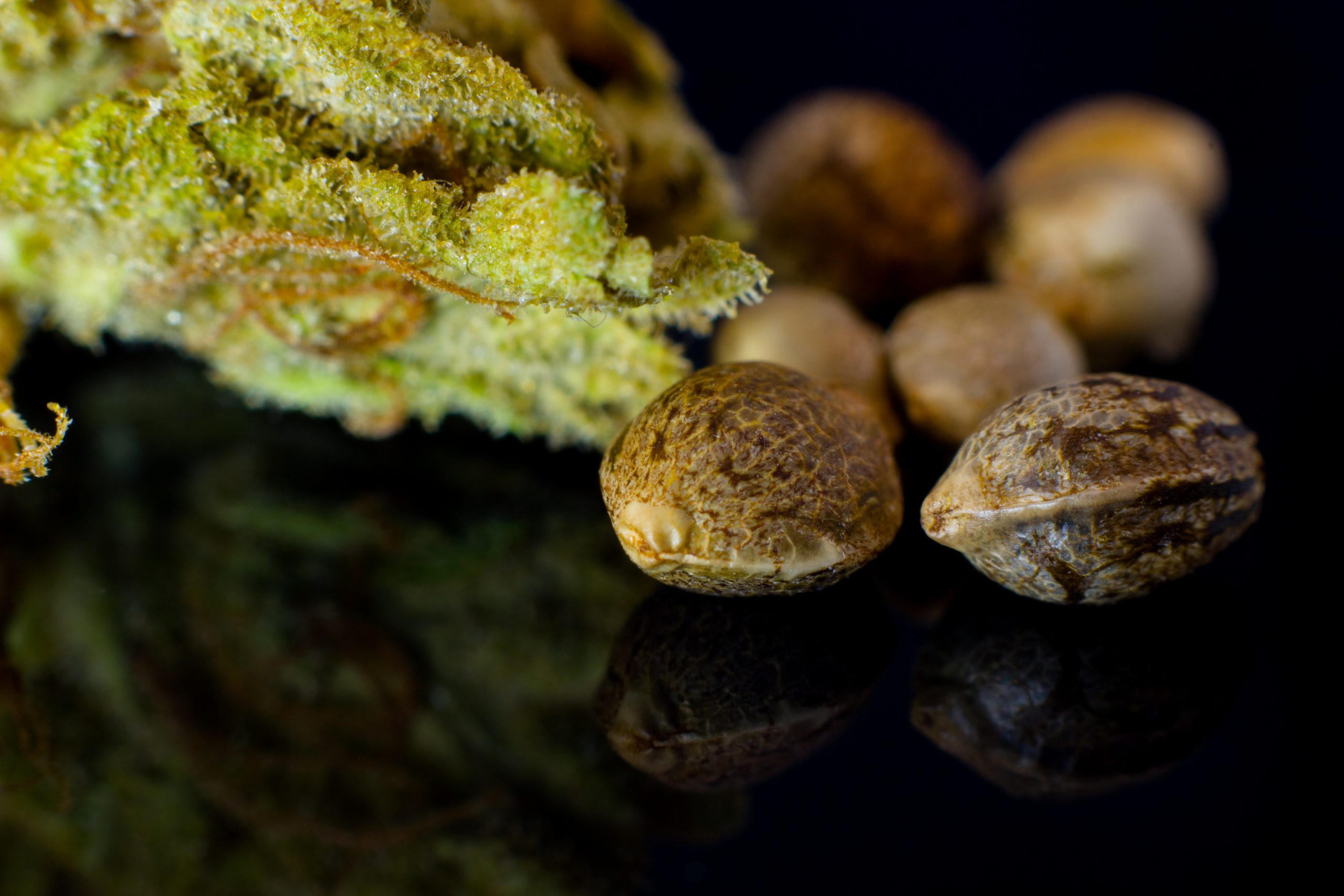
If you’re buying seeds from a vendor, it’s important to assess the quality of what you’ve received. While there are many different types of cannabis seeds that have their own markings, you can still judge a seed by its coloration. For instance, seeds that are light green or even pale are a sign of immaturity.

In many cases, immature seeds of this hue are not capable of germination. What you want to see is a brown coloration of either a dark or light hue. This means the seeds are mature and are ready to begin the germination process when you are.

Aside from the color, it’s also a good habit to take note of a seed’s age. While it’s possible to germinate a seed that’s decades old, you can expect slower seed germination rates with older ones. It’s best to germinate seeds that are on the younger side of the spectrum.

The ideal length of time is no more than 6 months of proper storage. Any longer than that and you risk encountering various complications in the germination process.

Are you wondering where you can get high-quality seeds? The good news is that you can order seeds from the comfort of your own home by going online to a reputable seller’s site.

Germination With Paper Towels

There are several different seed germination methods you can use, depending on your preferences and circumstances. Did you know you can germinate marijuana seeds with paper towels?

It may sound like a type of fairy tale but it’s actually one of the most popular methods around. To get started you’ll need paper towels, of course, but also a plate, a sprits bottle, and labels. You can use a heat mat to help with the process but it’s not 100% necessary.

Be sure to get seeds that are either feminized or auto-flowering. To get started, you should put a few sheets of paper towels on top of your clean plate. To avoid confusion, it’s best to label your plate with the type of marijuana strain you’re growing.

You can then place as many as 10 seeds on a single plate. Be sure to give the seeds at least an inch of wiggle room between the others. Afterward, you can use your spritz bottle to spray the area until the paper towels are soaked.

Once that’s done, it’s time to place a new layer of paper towels on top of the seeds and soak those too. As far as the germination process, it’s as easy as that and shouldn’t take longer than one or two days. However, they won’t germinate if you allow the paper towels to dry, so be sure they’re saturated up until the moment they germinate.

At this point, it’s time to relocate the seeds from their paper towels to a pot with soil in it. Tweezers are the best tool for the job. Remember that the germinated seeds are quite fragile so you must handle them with as much care and caution as possible.

Germination With Soil or Rooting Cubes

If you want to germinate seeds in soil and avoid relocation to a pot, it’s important for the soil to have a loamy consistency. The soil shouldn’t be packed too tightly within the container either.

For those who are just starting out, rooting cubes are a great method for learning the ropes. The cubes are a perfect middle ground between paper towel germination and soil germination.

You’ll need a pH meter to measure the overall pH solution of the cubes. The ideal pH level is 6. The germination time for this method can end up being as quick as 2 days or as slow as a week. 

Are You Ready to Germinate Marijuana Seeds?

Now that you’ve learned about how to germinate marijuana seeds, you can grow the best weed around. Be sure to tell your friends and family members how they can do it too.

We can provide you with all the cannabis seeds you could ever need, including feminized seeds, auto-flowering seeds, CBD seeds, and much more. Our customers are always coming back for more because we pride ourselves on quality.

Do you have questions about our product? Feel free to reach out. We’re always happy to help out in any way that we can.

How To Find Seeds in Weed: A Useful Guide for Growers

When it comes to cannabis, most growers don’t focus on breeding and fertilizing their plants. It is common practice to only grow what you smoke, however, breeding your weed is also an essential and exciting part of the process.

Whether you’re new to growing or want to branch out into breeding, here’s everything you need to know about how to find seeds in weed.

Why Grow Marijuana Seeds?

The first step to understanding weed seeds is to know why they’re important. Cannabis plants, just like many flowers and crops, come in both male and female varieties. Female plants get pollinated and grow buds for consumption, while male plants produce seeds and pollen. 

These seeds are essential for creating new plants, through which you can continue to grow your own. Since regular plants have a 50/50 chance of being male or female, by continuing the pollination of only a few plants you still gain new buds to smoke. So the constant growth will be beneficial for avid smokers. 

Oftentimes, however,  non-pollinated weed is considered best since the plant will have more cannabinoids in each bud. Because of this, most growers toss male plants once they’re identified.

“So if you are growing to smoke why keep male plants?” You may ask yourself. Well, the answer is quite simple: so you can continue to grow your own supply at home. Additionally, breeding creates new strains, and as any weed enthusiast will tell you, new strains are awesome. 

Breeding can be an engaging process from start to finish, allowing you to have full control over what strains you grow and how many seeds you have to begin your production. Male plants also allow you to continue enhancing your grow, rather than waiting for your new seeds to ship.

How To Find Seeds in Your Marijuana: A Step by Step Guide

Step One: Identify Your Plants

Male plants grow the pollen while the females grow the buds. Despite what some people may say online, it’s impossible to tell whether a seed will be a male or female until a few weeks after sprouting. Once your plants are growing, look for these indicators:

  • Stalk Width – Males have longer, thicker stalks than females since these plants grow taller.
  • Leaf Density – Male plants pretty much only exist to pollinate the females. So, less energy and resources are spent on creating leaves and buds. As a result, female plants will have thicker leaves and more of them.
  • Pollen Balls – A quick way to determine the sex of your plant is to look at the joint between branches. Males will have pollen sacs, and females will have tiny white hairs growing in the same spot.

If you’re using feminized seeds, most of your plants will be female. However, some of them may become hermaphrodites, meaning they can self-pollinate. In this case, you’ll notice both sex organs on the plant. If you are growing solely for consumption, this can become a problem. Luckily, you can read up on hermies and how to prevent them from creating seeds here

Step Two: Allow for Pollination

There are two ways you can do this, depending on what you’re trying to achieve. You can take a surgical or a natural approach to pollination. The surgical option means:

  • Isolating your males
  • Harvesting pollen
  • Fertilizing specific female plants

This process works well to test a few new strains before committing to a new crop. Most high-end growers will recommend this method because it offers so much control over the situation.

The natural option means just letting your marijuana do its thing. Male plants produce a lot of pollen, and if you have fans blowing (or grow outdoors), a single male can pollinate many females. This method requires far less effort but may mean that your entire crop will wind up with seeds, so plan accordingly.

Step Three: Check the Buds

Males only produce pollen, while females create the seeds. The bud is where you’ll find the seed, and it takes about two to six weeks after pollination to develop. You can look at your buds to see if seeds are growing inside.

Step Four: Harvest the Seeds

If you are a grower, you should already know how to harvest and dry buds, so that process is still the same. Simply crack open each bud and take out the seeds inside. They should be ready to grow within a month after drying.

However, if you are new to growing marijuana plants, this step-by-step guide can help you understand the entire process of harvesting and drying buds. 

Tips and Tricks for Getting Seeds From Your Cannabis

Once you start making new strains, it’s easy to grow more and see which combinations you can create. Also, as you go through different crops, you may discover some that you want to cross-pollinate with others. So, here are some tips to keep in mind when trying to get seeds:

  • Use One or Two Males – Fortunately, you don’t need a whole crop of males to pollinate your plants. In fact, you don’t even need a complete specimen. Males are easy to clone, and you don’t need a large stalk to get lots of pollen.
  • Keep Meticulous Records – As you start breeding your plants, you’ll want to keep track of different strains and seeds. Detailed records help ensure you never lose a golden opportunity for a new strain.
  • Start Small – Pollinate and collect seeds from a few plants first. Once you see how the process goes, you can expand to a larger crop if necessary.
  • Avoid Accidental Pollination – Cannabis pollen is tiny and floats in the air easily. Even something as simple as handling males before females can lead to accidental fertilization. Also, be sure to turn off all fans before pollinating.
  • Use Regular Cannabis Seeds – When growing for cannabinoids, you might want to use autoflowering or feminized seeds. In this case, regular cannabis seeds ensure you’ll get both male and female plants to continue the pollination process. 


Gorilla Glue Strain Profile: The Most Powerful Sticky Marijuana Plant

Gorilla Glue is a full-bodied, earthy hybrid strain that is as known for its pungent aroma as it is for the strong and calming sensation that the strain provides. Also known as Gorilla Glue #4, Gorilla Glue strains are known as sativa-driven hybrids with elevated THC levels. When shopping from reputable seed banks, this strain can be acquired as Feminized, Regular, or Autoflowering seeds.

Gorilla Glue Plant Genetics

Gorilla Glue is considered a legendary strain thanks to its award-winning history. A powerful triumvirate of plant genetics, Gorilla Glue seeds grow into knock-out champions thanks to buds overflowing with resin and trichome production. As strong in flavor as it is in scent, Gorilla Glue features a three-way cross between Chocolate Diesel, Sour Dubb, and Chem’s Sister.

First arriving on the cannabis scene in late 2016, Gorilla Glue has grown (quite literally) into a crowd favorite. More than a traditional hybrid, Gorilla Glue brings about high levels of potency as well as a full range of experiential effects.

Primary Flavors and Effects

High levels of THC turn Gorilla Glue into one of the more potent and prominent hybrid strains on the current market. Thanks to percentages ranging from 20% THC to 32% THC, experienced users can enjoy effects that are almost instantaneous while lasting for hours at a time.

The primary effects of Gorilla Glue are reported to include high levels of happiness, euphoria, and an engaging yet calming sensation. Users report that the uplifting euphoria of Gorilla Glue can transition into a cerebral high that is as blissful as it is calming. Users of Gorilla Glue find that it can bring relaxation that borders on couch lock, leaving consumers with a long-lasting and comfortable high.

With a family tree brimming with gassy strains, consumers of Gorilla Glue will find some notable notes that repeat through every experience. Sour and chemical flavors mix well with gas and a nutty coffee taste.

Medical Benefits of Gorilla Glue

Due to the intense physical relaxation provided by Gorilla Glue, the strain has become a favorite among both medicinal and recreational users alike. Providing significant levels of relief as an analgesic, Gorilla Glue is ideal for helping to moderate pain levels throughout the day. Gorilla Glue can also help to mitigate some of the pain caused by migraines, muscle spasms, and chronic body aches. Gorilla Glue strains also contain small levels of CBD, which can help fight against inflammation.

As far as psychological benefits go, Gorilla Glue is a popular hybrid strain for individuals struggling with anxiety and depression. With high levels of THC and a calming terpene profile, Gorilla Glue helps ease individuals with troubled minds by putting them into a calmer and more positive mental space.

Additionally, Gorilla Glue is a strain that assists and aids with hunger levels. Individuals struggling to eat regularly will find that this strain assists them in the battle against their eating disorder.

As with all strains, individual users will find that their experiences may vary. Consult a physician with any medicinal concerns you may have.

Growing Gorilla Glue

Gorilla Glue is an ideal strain for beginners to try and cultivate their cannabis. Individuals will not need any special tools, nor will they require extensive gardening experience to find success.

Ready for Any Environment

Gorilla Glue is a notoriously easy strain to cultivate because it can adapt to just about any environment. Thanks to its Indica heritage, Gorilla Glue has a relatively small plant structure that does not require extensive amounts of space. Hydroponic and outdoor growers alike will be able to cultivate Gorilla Glue in relative comfort.

Gorilla Glue grows best when it is kept in a warm and humid area with plenty of available light. Take care to moderate both temperature and humidity to maximize your potential yield. Rocket Seeds reports that grows of Gorilla Glue can yield up to 600g of resinous buds per square meter.

From start to finish, Gorilla Glue regular seeds will finish flowering indoors in roughly 10 weeks. A short and bushy plant, Gorilla Glue will grow increasingly top-heavy as resin-filled mugs begin to adorn the plant. Regularly trimming your plant will keep the grow contained while improving overall production.

The first yield of Gorilla Glue was manifested by accident when a hermaphrodite was pollinated. As a result, growers advocate checking and inspecting all pollen sacs during the flowering stage even if you acquire feminized seeds.

Growing Profile for Gorilla Glue

Gorilla Glue is an Indica-dominant hybrid with parents Chocolate Diesel x Chem’s Sister x Sour Dubb. The strain grows best in sunny and temperate climates where it reaches its flowering period within 10 weeks.

Average #s for Gorilla Glue grows:

  • THC 24 30%
  • CBD 0.8%
  • Height 190cm
  • Difficulty Easy

While terpenes are hard to track and will vary from one grow to the next, Gorilla Glue is most closely associated with BCP, Limonene, Myrcene, and Humulene.

Individuals can acquire GG as feminized, autoflowering, and regular seeds in 5-, 10-, and 25-count packages.

Potential Benefits

As we alluded to above, the possible benefits provided by a strain will vary from one individual to the next. Factors that may determine your response to a strain include age, physical profile, activity level, and genetics.

With that said, Gorilla Glue has been turned to frequently to address the symptoms and conditions below:

  • Chronic Pain
  • Inflammation
  • Arthritis
  • Parkinson’s Disease
  • Ulcerative Colitis
  • Crohn’s Disease

Gorilla Glue Seeds From Rocket Seeds

Growing cannabis shouldn’t feel like an uphill and unwinnable battle. Rocket Seeds provides its clients with access to the finest auto-flowering, feminized, regular, and CBD-dominant strains on the market. Brimming with THC and medically supportive terpenes, Gorilla Glue is an easy-to-grow strain that can be added to any cultivation corner with relative ease.

Start shopping today to learn how to bring Gorilla Glue to life in your garden. The team at Rocket Seeds is ready to help you become the cannaseur of your dreams!

Buying Weed Seeds Online: A Beginner’s Guide

The widespread and ongoing march toward embracing marijuana on a national level has begun. While federal legalization may still be quite a few years away, many states are taking it into their own hands to empower cannabis enthusiasts with the ability to legally buy weed seeds for cultivation at home. With so many restrictions and questions regarding the legality of acquiring weed seeds online, it is important to have a broad and deep understanding of the subject before encroaching upon it personally.

Today, we are going to take a long look at growing marijuana from seed, best practices for acquiring weed seeds, and some of the best strains to start out with on your growing journey.

Cannabis Seeds 101: Understanding the Law

Marijuana presently exists within a confusing space. Legal in some states, while illegal federally, the regulations and restrictions can become overwhelming and/or confusing. To make matters clear, let’s take a deeper dive into some of the most important legal questions surrounding the acquisition of seeds as well as the law.

So What ARE Cannabis Seeds?

Pot seeds are roughly the size of a peppercorn with an ovular shape leading to a pointed end. Seeds can range in color and striation, though they are typically brown. Seeds that are not fertilized will usually have an off-white appearance along with a significantly smaller body.

Pot seeds are among the best ways to cultivate from the comfort of home. Affordable and flexible, marijuana seeds give growers the ability to cultivate specific strains with certain characteristics to support their health and wellness.

Are Cannabis Seeds Legal to Buy Online?

If fully grown and cultivated pot plants are illegal on a federal level, what about the seeds that they originate from?

Marijuana seeds are treated just like any other product by the broader strokes of legislation, the same as flower, concentrates, and edibles. The legality of these seeds varies based upon the state in which you reside.  States in which pot has been legalized will allow for the sale and acquisition of seeds online, but only if both buyer and seller are located within the same state.

Transporting marijuana across state lines is illegal no matter what.

Always opt to check your local legislation before making any decisions. In states where recreational pot has been legalized, buyers need only to be 21+ to make an order on the internet. In states where it has not been legalized for recreational or medicinal use, purchasing seeds online is completely illegal.

At the time of writing this blog, 18 states have legalized the recreational use of pot, and it is within those states that it can be purchased online. 

Is It Legal to Grow Weed?

The legalization of cultivation varies based upon the state in which you reside. In the state of California, legislation passed in 2016 under the Adult Use of Marijuana Act made it legal for adults 21 and older to cultivate up to six plants for personal use. Medical cannabis consumers can get approval from their health professionals to grow it for medicinal use.

When in doubt regarding the law and legality of cultivating, err on the side of caution and discuss your situation with a legal professional. While cultivation is gaining wholesale acceptance around the nation, the repercussions are still massive for potential missteps.

Best Beginner Strains to Grow

For individuals looking to embrace cultivation, there are certain strains that stand out as being more appropriate for first-time growers. Buying strain-specific seeds can be a great way to ensure your happiness with the overall results.

Here are a few ideal beginner strains for newcomers to cultivation:

  • Jack Herer Jack Herer is an iconic name in the ganja industry – not just for his namesake strain. Jack Herer wrote The Emperor Wears No Clothes in which he dissected the absurdity of cannabis prohibition while simultaneously promoting the benefits of hemp. Jack Herer is a sativa-driven strain with THC ranging between 20% and 28%, typically. 
  • Granddaddy Purple – Outdoor growers in dry climates will enjoy the easy cultivation that comes with the Granddaddy Purple strain. Also known as GDP, Granddaddy Purple is an indica-dominant hybrid that provides feelings of relaxation and elation.
  • Blue Diesel – Another favored hybrid, Blue Diesel leans on the indica side of things because of its relaxing and sedative nature. Blue Diesel is ideal due to its pleasant aroma and smooth smoke, as well as high yields.
  • Green Crack Also known as Mango Kush, Green Crack is a beloved strain due to its high levels of THC, which invigorates cerebral function and increases energy levels.

Benefits of Growing Weed

Making the leap from purchasing cannabis to cultivating it can feel like a huge step. Thankfully, growing is a process that we can all undertake with a bit of preparation. If you want to buy seeds online but are hesitant, consider the following benefits that come with at-home cultivation:

  • Dramatically Reduce Costs – Growing at home can dramatically decrease your expenses. An ounce of top-shelf flower can range between $110 and $425 depending on the state and strain. Buy Green Crack seeds from your favorite seed bank and cultivate ounces on your own time.
  • Ultimate Quality Control – Don’t ever worry again about what is going into your body from the dispensary. Control the entire production from the sprouting of your weed seeds to the blooming of your plant.
  • Convenience – There is something uniquely comforting about having your own stash of homegrown flower. Ideal for medicinal users who don’t want to make the trip to the dispensary, home-growing solves many problems!

Before buying seeds online and growing weed at home, take time to learn the local laws and legislation in your home state or country. When you are ready, purchase seeds online from a reputable seed bank to begin your cultivating journey!

Northern Lights Strain Profile: The Origin Of A True Indica Classic


If you’ve ever laid eyes on a cannabis plant, you’ve probably heard of the Northern Lights strain. Available from Rocket Seeds in Autoflowering, Feminized, and Regular seeds, Northern Lights is an iconic indica that is world-renowned for its effects.

First arriving in the cannabis industry during the early 80s, Northern Lights has racked up awards from cannabis competitions all over the world. Along the way, the strain gained notoriety as one of the most popular Indica strains on the planet. In fact, the widespread popularity of Northern Lights has been foundational for growing today’s legendary strains like White Widow and Chronic.

Originating from mysterious sources, the Northern Lights strain was said to have come from an island near Seattle, WA. The plant would eventually make its way to the Netherlands, where Nevil Schoenmakers would help popularize the strain as we know it today.

Northern Lights Plant Genetics

Northern Lights has a fascinating genetic history thanks to its unique crossing of Afghani with Thai Landrace. Northern Lights has become a popular Indica-dominant parent in many of today’s most popular strains (White Widow, Chronic, Haze).

According to legend, the Northern Lights strain was grown in isolation under 11 different phenotypes, named Northern Lights #1 through #11. After comparing the plants and their respective yields, the original cultivator found that Northern Lights #1 and #5 yielded the best resin production, the largest buds, and the heaviest yields.

Primary Flavors and Effects

While the mythos surrounding the Northern Lights strain is fascinating, the history of the plant would be irrelevant if its effects and flavors were not completely on point. While not the most potent of strains, noting average THC levels in the high teens and early 20s, Northern Lights can still provide potent levels of relaxation that span from head to toe.

A balanced Indica, Northern Lights provides assistance with pain relief while soothing aches and pains. Deep relaxation can lead to sedation which allows Northern Lights to offer relief from insomnia and general restlessness. Revered for its calming effects, Northern Lights is often a choice for individuals looking to ease their anxiety while attending to other mood disorders.

Flavor for Northern Lights is top-tier with a focus on earthy pine notes with a layer of sweetness atop it all. Consumers of the Northern Lights strain compare it favorably to the old-school flavor that strains of yesteryear had to offer. Rocket Seeds describes its Northern Lights as a blend of skunk and spice with an ever-present scent of citrus and pine.

Medical Benefits of Northern Lights

Due to its balanced yet powerful effects, the Northern Lights strain has become a favorite among both medicinal and recreational users. As a legendary Indica, Northern Lights brings about intense feelings of relaxation, bliss, and comfort. These feelings can combine to provide relief from pain, arthritis, and even migraines. Medical users will also find that Northern Lights can also present assistance with lack of appetite and sleeplessness.

On a physical level, Northern Lights imbues individuals with a deeply comforting, relaxing effect that quickly escalates into couch-lock. Larger doses of Northern Lights can lead to sedation and, eventually, sleep.

Growing Northern Lights

Northern Lights is a favorite among growers both new and old to the field. Regarded as something of a staple in most cannabis cultivation centers, Northern Lights grows quickly and with relative ease, finding flowering in just eight weeks.

As a legendary Indica, the growth structure of the Northern Lights plant lives up to its lineage. Northern Lights grows in a sturdy, compact, and bushy plant with firm buds that make for easy trimming. Space between nodes allows cultivators to trim as much as possible, allowing for the maximizing of resin and bud production.

Cultivators looking to get a head start on their cannabis production can opt for Northern Lights Autoflowering Seeds from Rocket Seeds. Autoflowering seeds will burst into full bloom within nine weeks when grown inside. When grown outside, Northern Lights will still prosper with relative ease so long as temperatures stay stable.

Due to the Afghani heritage of the plant, Northern Lights should receive plenty of sun throughout its growing cycle. Resistant to outdoor climates as well as drought, Northern Lights is a great project for novice growers to undertake as it is a robust plant. Depending on their cultivation process, growers can enjoy up to 550g of yield per square meter.

Growers looking to maximize their yield will want to get into the habit of perfecting a trimmed canopy. Pruned top leaves will allow light and nutrition to reach the buds that you prize and desire. Northern Lights buds are typically compact, which means mold is not as common an issue as other strains might suggest.

Available in Feminized, Autoflowering, and Regular Seeds.

Potential Benefits

An incomparable Indica, Northern Lights offers a potent experience in a relatively innocuous package. Northern Lights strains are ideal even when high in THC because they tend not to produce the psychoactive paranoia or anxiety that other strains may manifest. For individuals looking for a heavy-handed yet calming experience, Northern Lights by Rocket Seeds makes sense as an option for harvest.

On the potential negative side of things, individuals consuming high amounts of Northern Lights will likely experience some level of dry eyes as well as dehydration. For prolonged sessions with Northern Lights, opt to have a cold beverage on hand to help with hydration.

Buy Northern Lights Today at Rocket Seeds

Northern Lights Autoflowering Seeds are a great way to kickstart a cannabis garden. Easy to grow and easier to enjoy, Northern Lights is a potent Indica that delivers balanced effects backed by rockstar genetics. Purple-hued buds and a short flowering time (under nine weeks) allow growers to feel like they’ve leveled up their game, even if this is the first time they’ve ever cultivated cannabis.

To learn more about Northern Lights, autoflowering seeds, or cannabis cultivation in general, consult with the team at Rocket Seeds!

Statement from Rocketseeds

[vc_row][vc_column][vc_column_text]We understand that some breeders are upset about strains being sold on our website that they claim belong to them. We take these allegations seriously. The strains in question are sold in many seed banks around the world and have been for years. Rocket Seeds is an experienced seed bank. We have a close relationship with many cannabis seed breeders, enabling their strains to be sold to the masses.

Before the seed industry can move forward, we must learn about the past.

Many of the strains seen in California today were created from genetics sourced from British Columbia in the 90’s – some, also, from the UK, Spain and the Netherlands. In particular, Vancouver’s Marc Emery Seeds was a prolific provider of genetics to growers in California between 1994-2005. This company was closed by the DEA in 2005; Marc was found guilty of shipping cannabis seeds to the USA and served 5 years in prison. Marc’s co-accused Greg Williams made this statement in 2010 regarding their “overgrow” years selling cannabis seeds to the USA:[/vc_column_text][porto_blockquote view=”with-borders”]“In that time, we sent seeds to every corner of the planet and I would like to think that we played a role in what would eventually overgrow the governments in Colorado, Washington and Alaska. Beyond donating thousands of dollars to help with their ballot initiatives, we sent huge numbers of seeds to those states. It’s an honor to know that many of those strains are now being sold legally in shops, as well as lending genetics to make the new and exciting strains that are winning awards all over the world.”[/porto_blockquote][vc_column_text]Rocket Seeds has a strong relationship with multiple breeders around the world. Our breeders have been with us since 2008, and we are always looking for more talented breeders to join our mission of selling cannabis seeds globally. We do our due diligence on the strains we carry before purchasing them and releasing them to the public. Before putting a strain on our website, we ask breeders to declare the lineage or source of their strains. An old-school unwritten rule in the seed industry is to not use the strain name others are using if not given or granted permission.

If you are a breeder who sells seeds to the public, you should have a reasonable expectation that your seeds could be bought by a European breeder, bred and sold back to other seed companies such as Rocket Seeds. When you sell your genetics, you cannot control what the buyer does with said genetics. If one of your buyers decides to breed and sell the seeds from their plants, that is your buyer’s right. The same goes for anything sold by our company; our own genetics have been crossed and sold around the world by thousands of growers. So, we ask: why aren’t the breeders of parent genetics mentioned in a new genetic strain description? Do they not deserve credit for all the hard work they did for you to create this strain?

Rocket Seeds has partnered with Seed Tracker Technology (STT) to be the first seed bank to allow any breeder that sells seeds of any kind to have personalized QR codes on their packaging. This is to create a growing community that the industry has never seen. This QR code will allow you to scan each seed pack and show you the lineage, the planting and harvesting dates, and date the seeds were packaged, along with tips and tricks from breeders to growers.[/vc_column_text][/vc_column][/vc_row]

Top 10 Strongest Marijuana Strains

Experienced cannabis advocates may reach for their favorite strains to address anxiety, pain or even depression. With literally countless strains available in the world and new phenotypes constantly being developed, it can help to have the strongest marijuana strains curated for your ease of access.

Today, we are going to take a closer look at ten of the strongest cannabis strains currently available.

First, however, we must learn exactly what makes cannabis strong or weak.

What Makes a Strain ‘Strong’?

We’ve all experimented with cannabis strains that have left us glued to the couch or racing through the halls with bursts of energy. While much of cannabis research is focused on THC % as an indicator of cannabis strength, it shouldn’t be the only indicator looked at. As it turns out, THC content is only one aspect of what makes your cannabis so powerful.

Let’s take a closer look at a few different elements that can impact the strength of your favorite marijuana strains.

  • THC: While THC isn’t the only number worth monitoring for cannabis strength, it is an important one. THC content can range from close to 0% in CBD-dominant plants to north of 30% in high-THC grows. THC affects many of the psychoactive elements that users know and love, though high THC strains are also commonly associated with paranoia and anxiety.
  • Terpene Content: Terpenes are compounds within cannabis (as well as many other plants!) that impact the way our weed smells, tastes and feels. Terpenes are naturally occurring chemicals and they add unique elements to the consumption experience.
  • Genetics: More than anything, the genetics of a strain will impact the overall strength and potency during your experience. Certain strains impact our bodies in certain ways and that is determined by the mother and the father plant, or by whatever seeds you choose to grow with!

Another thing to consider when analyzing different cannabis strains is just how far things have come since the ’60s. The average cannabis potency in pot during the ’60s and ’70s was roughly 3.5%, at least according to reports by the U.S. federal government. Cannabis strains today can eclipse 30%.

What Should I Consider When Picking a Strain?

Plant genetics are the rhyme and the reason for the strength of cannabis today. Within the genetics of each plant, we can find the origins of its taste, odor, THC and CBD levels, as well as the physical characteristics that we know and love.

Cannabis cultivators today focus on curating seeds from reputable seed banks so that they can acquire steady genetics. Steady genetics mean that a landrace will always grow like a landrace, imparting similar characteristics with every grow.

Top 10 Strongest Marijuana Strains

While there are as many unique strains as potential cannabis seeds, finding the right strength for your needs can be difficult.

Today, we are going to outline ten of the most commonly accepted super-strength strains on the market. Keep in mind that everybody will react differently to cannabis, so use this information as a guideline rather than an almanac.

Bubba Kush

Bubba Kush is an indica strain best known for its stress-reducing capabilities. With average THC content in the mid-to-high 20s, consumers can expect an experience that is as relaxing as it is therapeutic, ideal for both daytime and nighttime use.

Bubba Kush rose to prominence despite its mysterious genetic background, rising to the top of the industry with strong effects and vibrant purple hues. Growers can bring home Bubba Kush hybrid marijuana seeds to develop their heavy plants packed with resinous flower.

Sour Diesel

Also known as Sour D, Sour Diesel has been a popular part of cannabis smoking circles since it first gained ground in the early ’80s. Sour Diesel provides invigorating relief that can turn a smile upside down while giving the consumer a reason to get moving in the morning.

Sour Diesel can range in THC percentage depending on the grow, though it is most commonly found around the 18.5% mark. Sour Diesel will impart a unique blend of Diesel, fruit and citrus directly to the nose.

Sour Diesel remains a top-tier strain thanks to its punchy effects that both energize and uplift, making it an ideal choice for individuals with bipolar disorder or depression.

Grandaddy Purple

Revered for its pure indica lineage, Grandaddy Purple looks as impressive as it feels. GDP grows well in humid climates where it can expand outdoors to truly thrive. Grandaddy Purple averages around 23% THC with notable sedating effects.

Grandaddy Purple is known for offering individuals notes of euphoria alongside deep bouts of physical relaxation.

Chemdawg #4

A soaring high greets every Chemdawg #4 consumer. Packed with fuel and brimming with pain relief, this indica-dominant hybrid will expand your mind while melting your body into the couch. Chemdawg is revered by cultivators and celebrities alike as it was named by Seth Rogen as one of his favorite strains. Chemdawg can feature THC levels exceeding 25%.

Bruce Banner

If you’ve ever seen The Incredible Hulk, you know what to expect from Bruce Banner. Also known as OG Banner, this hybrid strain is powerful with euphoric notes that send consumers into space with a heady, relaxing and creative high. Bruce Banner can be found with THC levels exceeding 29%.

Bruce Banner requires roughly 8 to 10 weeks to flower. Bruce Banner is available in several phenotypes with another edition making our list later on.

Gorilla Glue #4

Also known as the Original Glue or GG4, Gorilla Glue #4 is a world-famous hybrid strain that provides as much euphoria as it does relaxation, and it brings about plenty of both. Gorilla Glue is a cross between Sour Dubb, Chocolate Diesel and Chem’s Sister.

Smoking Gorilla Glue can leave consumers comfortably ensconced in their favorite blanket while waves of relaxation undulate over them.

Strawberry Banana

A 70/30 hybrid, Strawberry Banana is also known as Strawnana in some markets. Strawberry Banana is a world-class hybrid strain that provides notes of fruit with a deep strawberry smell. Growers will appreciate the high resin production of this strain, which leads to powerful highs that are as creative as they are sensory-filled.

Blue Dream Feminized

One of the mainstays of the cannabis cultivation world, Blue Dream Feminized cannabis is a hybrid strain with Sativa dominant notes known for its high levels of THC. A cross of Blueberry and Haze, Blue Dream provides giant beautiful buds that are easy to cultivate due to their natural pest and disease immunity.

Blue Dream Feminized cannabis can be grown both indoors and outdoors, though a lot of space is required to accommodate the large canopy the plant creates.

Bruce Banner

Also known as BB, Bruce Banner is a famous hybrid that gets its name from the alter ego of The Incredible Hulk. As one of three phenotypes from the famous Bruce Banner strain, #3 provides bursts of euphoria that slowly transition into waves of relaxation.

With a Diesel undertone and a sweet finish, Bruce Banner #3 is an ideal strain for mindful relaxation as well as our creative pursuits.

Lemon Kush

Lemon Kush is a fascinating strain brought forth by Lemon G and South American to provide a 50:50 hybrid that perfectly balances both its Sativa and indican characteristics. Heralded for its unique flavor and cerebral high, Lemon Kush is commonly sought after by artists and other creative individuals that want to wake up as they create.

Lemon Kush can be grown both indoors and outdoors with an average flowering time of roughly 10 weeks while cultivated under a roof. THC levels range between the low teens and the low 20s with minimal, if any, amounts of CBD.

Growing Guide: Marijuana Seed Indoors

[vc_row][vc_column][vc_column_text]Each year, the strongest weed strains are substituted by something trendier. When choosing the strains to cultivate, there are quite a few factors to consider, particularly if the set-up were indoors. Among other stuff, you’ll need to evaluate flowering periods, yields, effects, and tastes. Growers sometimes arrive on their preferred strain after repeated trial and error, and it can be costly. While all varieties of cannabis may be grown in a growing space, this group of indoor cannabis seeds applies to strains particularly suggested for indoor cultivation. Growing marijuana indoors is the safest way to maintain a fully healthy climate where the grower decides each factor. In the growth process, indoor growers are reliant on outdoor weather and temperature conditions.


Benefits of Growing Indoors 

While it’s quite resource-intensive unlike cultivating outside and you would have to invest more resources on electricity to fuel machines, you can monitor any part of your grow area and also what you place throughout your crop, enabling you to turn in your system to develop any cannabis.

Adaptability

You are not associated with the sun as well as the weather, as opposed to developing outside. You will provide all of the ecosystems that plants require to prosper and manage the quantity of water and resources they get, including the growing medium, Rockwool, soil, and many more also the temperature, moisture, and regulation.

In addition to the easy to regulate temperature, humidity is also much easier to control in the room where plants thrive. This means that the plants become less vulnerable to mold infestation. When seeds or plants are molded, they must be disposed of properly and new plants must be grown once more. The humidity-regulated interior is less worried since the plants can need disposal and replacement. There is a lower possibility.

You have Control Over your Growing Conditions

Growers track the type of soil utilized by the plant indoors, adjusting as necessary to find the right soil for growing the largest buds. The water supplied to the plant may be monitored by them, meaning that it is not too little or too much. To ensure that they have everything necessary to survive and can adjust the lighting for the plants, they also track the nutrients provided to the plant.

To enable the plant to develop as large as possible, growers can hold the lights on for 24 hours a day, at the onset, and switch to 12 on it and 12 off to allow the plant at the beginning of the flowering season to start flowering. This permits the production of more flowers that can trigger wider buds.

You Have More Time for your Plans

The stations are locked inside, so it’s not important to worry from outside while they have to be worked on. The grower can monitor the plants at every time of day to make sure that they mature correctly, check for problems, and keep an eye mostly on plants. This allows it to identify and remove male plants if the grower may not expect to see the female plants produce seeds, and bugs and viruses are more simple to find before they are uncontrolled.

Hygienic Environment

You have control over the atmosphere indoors, and that’s good news when you take control of the environment. In comparison to the many possible variables that can weigh through an outdoor growing formula, you can have a very clean and hygienic space. This is highly important for farmers who are seeking to make use of their plant goods medically.

You Have a Control Over on Pollinating Plants

Crop pollination is indeed a serious concern and a valid reason for growers. Those who grow cannabis for consumption would want the best overall buds and would not want to care for plants, however, if, at all necessary, they would like to avoid pollination. Those who grow their plants or optimize a strain will like to make sure that the intended male plant induces pollination, not but one which seems to be nearby.

Security and Privacy

You may want to conceal your crops from public eyes that are in court and even potential suspects, even in lawful states. Growing inside lets you grow discreetly underneath a locked door. Indoor development is stronger for stability than outdoor growth. This is highly relevant in states with complex legislation in place. Indoor development requires certain laws to be conveniently implemented.

You Can do more Experimenting with Seeds

Different formulas may be played carefully inside to figure out what best suits to minimize those features. Many people who are looking for a way to easily explore will notice the pollination can be monitored indoors, ensuring the plants were pollinated and only pollinated by the planned male plant. If several experiments are conducted simultaneously, care is to be taken, but cross-pollination within is far easier to track and prevent than outside.

Larger Harvest

Cannabis plants mature in the flowering space, 12/12 cycle. In the meantime, in the growing room, the grower exposes the clippings to 18 hrs of light for 6 hours every night. Here, they will stem and germinate, while the plants reach the first room at the end of the maturing cycle. All you have to do after all the preceding ones occur is to put a fresh selection of marijuana plants into the flowering room. In the early blooming season, this new collection of marijuana plants reached maturity. Using this technique, you can achieve four to 6 crop production per year.

TOP 10 Marijuana Seed for Indoor Growing

Gelato Seeds

You fell in love with Gelato’s sweet taste. This is a strong and delicious strain of about 25 percent with strong THC content. Growing it is not a simple strain as it may be a finicky vine. Develop this indoors and get about 700 of yield per sq meter of growing area for a really large yield.

Gelato is indeed a successful addition to every garden. It is the resulting strain of the Thin Mint GSC and Sunset Sherbet combination. The strain’s aromatic resin holds a strong THC level of about 18-25 percent with a delightful taste profile. Gelato, then, is powerful, but so delicious. The strain is not that hard to develop. When you raise this plant indoors, it has great physical qualities that are helpful. In the long term, the trichomes of flowers can transform into a glistening layer of crystalline white resin.

Gelato can develop up to six feet in height, but for indoor growth, you can easily hold it in good condition. Training exercises are there to help you monitor the development of the plant and enable the improved development of buds. The flowering cycle is 8-9 weeks long. It may yield around 500 g each sq m when developed indoors. 

Wedding Cake Autoflower 

Wedding Cake Auto is an Indica-leaning feminized hybrid weed strain developed by mixing a strain of Wedding Cake and a strain of Ruderalis. 

The flavor, smell, and results of the traditional Wedding Cake have been preserved by Wedding Cake Autoflower, but automated features have been acquired. From marijuana germination to harvest season, Wedding Cake Autoflower blooms in only 65 -72 days. For buds with 17-20% THC, you’ll get top yields. As you don’t need to do anything to develop this strain, Wedding Cake Autoflower is for the beginner grower. It is automatic, so to induce flowering, you don’t need to use a special lighting cycle. And you can also have two or three harvests in a year because of the limited flowering season! Wedding Cake Autoflower Marijuana Seeds can send you up to 150 g each crop outdoors, however, 600 g per sq meter indoors when proper growth criteria are met.

White Widow Feminized 

A recent Cannabis Cup Champion who is heavy in CBD and THC is the feminized White Widow. It is popular for the white crystals of trichomes and orange hairs that grow at the end of their stage of flowering. A fantastic yielder, White Widow is easy to grow and is suitable for cloning. The buzz of this marijuana strain is extreme with a powerful cortical influence, topping at 24.10 percent THC. Considered to be the most common strain in the world, our feminized seeds from White Widow are great for novice and skilled growers.

White Widow has dark green leaves and white furs and can grow outdoors to 8 feet wide, but with soil, hydroponics, or with Lighting control indoors, it can remain under 4 feet. Based on if you cultivate it both indoors and outdoors, the time it takes to grow White Widow can differ. If you need them to reach the flowering phase, you may have to alter the light cycle.

Black Widow 

The Black Widow, often known as White Widow, is the result of combining a Brazilian Sativa as well as hybrid marijuana from South India and is suggested to be cultivated indoors, allowing it one of the better indoor plants. The flowering period is 8-10 weeks, with indoor farmers being able to harvest about 350 – 450 gr/m2 for the best resin production in 10 weeks of flowering; buds with resin crystals would be thick and white. As it offers an overall calm and cerebral sensation, it is also used for medicinal uses, including pain reduction and muscle spasms.

AK 47 Seeds

The genetics and results of Indica reflect this strain’s development. Such plants are tiny and durable, making them a choice for growing either indoors or outdoors. Many areas where it would be permissible to cultivate marijuana need you to keep the crops out from the public spotlight. The tiny stature of these miniature Xmas plants, whether in a rising tent, greenhouse, or secret garden location, makes it easy to find room for them. However, due to the capacity to monitor growth environments, the growth indoors can have the best outcomes. These plants are sadly vulnerable to bud rot, but you can keep them safe by controlling temperature and relative humidity levels through pruning.

Amnesia Haze feminized 

Due to its very high degree of THC, the strain is recognized worldwide. Amnesia Haze is very good for indoor cultivation due to its characteristics. A comparatively long flowering period of 10 -12 weeks is the only “disadvantage”. Any downside has its benefits, too. Since the weed is potent due to the long flowering cycle, the yields can exceed 650 grams per m2, and both smell and taste are exquisite. Bear this in mind, so it’s easier to miss these cannabis seeds and go for milder varieties if you’re vulnerable to insanity.

Northern Lights Autoflower 

For growers with any expertise who want to take their abilities to the next step, Northern Lights Automatic is a perfect marijuana crop. As a consequence of its durable effects, Northern Lights Autoflower is quite the impact. This strain is reasonably easy to develop and creates award-winning results and scents. The Northern Lights are short and only over three feet. Its flowering cycle is around 55 days and after about a month or earlier, its seeds start to bloom. Due to its self-flowering characteristics and flowering cycles, Northern Lights Automatic will grow harvests of thick and trichome-rich berries up to 3 times a year.

Girl Scout Cookies

To create a high-quality autoflowering strain, Girl Scout Cookies Automatic blends the classic genetics of GSC with Ruderalis. This marijuana Indica-leaning autoflowering strain evolves into plants of mid-sized that react well with the training. Expect sweet-smelling buds high in trichomes which generate cognitive and physical benefits. GSC Automatic’s seed growth time is between 60 to 70 days. Plants may achieve a height of up to 35 inches which yields up to 7 ounces for each plant. GSC Auto is simple to grow and may generate an incredibly pungent aroma. Carbon filters can serve to make the interior more discreet.

Big Bud

Thanks to its very strong yields and thick buds, Big Bud is an outstanding feminized cannabis seed to cultivate indoors. In the 1980s, Big Bud was made popular and remains one of the toughest seeds around here. There is a hash-like taste and scent and mildly sedative effects of this Indica-dominant strain. Big Bud strain has a flowering period of 50 days to 65 days. During the bloom, this feminized seed will develop to such an average build and have a growth spurt. Bid Bud enjoys hot weather and can grow under a hydroponic setup indoors. The thick stalks help sustain the development of its heavy buds. For speedy development, Sea of Green (SOG) approaches can also be used.

Jack Herer

Jack Herer is not especially hard to cultivate but needs a certain experience of marijuana production and close observation of the crop. Jack Herer develops well under the correct atmospheric conditions in the soil and hydroponics. It thrives in the atmosphere of the Mediterranean. During its blooming time, Jack Herer will yield a modest yield for almost 7 to 9 weeks. With medium to deep leaves and loads of trichomes, Jack Herer grows long and thick buds. This renders this a slightly wet strain to work with owing to the heavy supply of resin. With all these resinous trichomes, also the spear and fan leaves, roots, and stalks are talented.[/vc_column_text][vc_column_text]Each year, the strongest weed strains are substituted by something trendier. When choosing the strains to cultivate, there are quite a few factors to consider, particularly if the set-up were indoors. Among other stuff, you’ll need to evaluate flowering periods, yields, effects, and tastes. Growers sometimes arrive on their preferred strain after repeated trial and error, and it can be costly. While all varieties of cannabis may be grown in a growing space, this group of indoor cannabis seeds applies to strains particularly suggested for indoor cultivation. Growing marijuana indoors is the safest way to maintain a fully healthy climate where the grower decides each factor. In the growth process, indoor growers are reliant on outdoor weather and temperature conditions.

 

Cloning Cannabis Plants: Comparison Between Autoflowers and Photoperiod

[vc_row][vc_column][vc_column_text]An incredibly fascinating method is cloning cannabis seeds. It involves taking a cut from a “mother” crop that has already been developed and using this cut to produce a completely new independent crop. And the new plant could share with both the mother the very same genes in which it was cloned. It indicates that cloning is indeed the best way for marijuana cultivators to maintain the genes of a specific strain they enjoy. All of the original features will be shared by the new clone, from either the way it tastes to the height it generates.

To several cultivators, cloning marijuana plants is indeed economically attractive. To grow the exact same strain, they don’t have to keep purchasing seeds; instead, they can simply take a cut from the coveted plant inside their crop and produce a homogeneous clone with all these advantages, it can seem that cloning ought to be a process that all growers use all the time. The process, however, does also have its limits. One major drawback is that it is very difficult, if not impossible, to successfully clone marijuana autoflowering strains. Given that autoflowering strains do have an enormous advantage over traditional strains, like standard categories and quick growth time, this can completely eliminate many cultivators from clones.

What Is Photoperiod Cannabis?

The ‘industry’ norm is photoperiod marijuana; it is the normal state of strains of THC-potent marijuana. On everything with an 18/6 and 24/0 light schedule, Sativa and Indica marijuana seeds can vegetate nearly continuously and will only reach complete flowering mode when their light timeline is reduced to 12/12. If cultivated outdoors, when planted at the start of the summer, developing photoperiod marijuana is only “naturally” effective, and naturally enters flowering mode also at the end of summer whenever the days are shorter.

Throughout the fall, natural marijuana grown outdoors would be ready to harvest. Without additional lighting and darkness, outdoor marijuana won’t generate normally at every other time of year. It could be better for novice growers to cultivate photoperiod marijuana indoors since it can be abused in the vegetative state and have time to recover because it can be vegetated before the grower chooses to shift the light cycle to flowering. The flowering period is usually considered to be the plant’s most fragile time, so a plant should be given the greatest consideration in its flowering period.

What Is Autoflowers Cannabis?

For the first cultivators trying to learn how to grow cannabis. Autoflower Seeds strains may not rely on meticulous care to advance through their growing phases because of ruderalis strong nature. Indoors or outside, they can be developed as the sturdy crop is easily applicable to most conditions. Self-flowering strains can be grown in favorable conditions at any time of the year. Autoflower prefers a light, airy growth environment which allows for faster growth of their root system. In living soils, which can provide shallow roots, they grow well. Autoflowering marijuana plants often react very well to correct nutrition to soilless substances and hydroponic processes. Autoflowering marijuana strains, except the light-sensitive parents, really aren’t heavy feeders. While autoflower need NPK supplements during their life cycle stages, supplies are a fragment of those given to photoperiod strains.

Contrasting Autoflowering and Photoperiod Marijuana Strain

The main difference between autoflowering and photoperiod crops is exposure to light. The flowers were renowned for their success. Some autoflowers require about 2 months from seed until harvest, while it takes at least 4 months for photoperiod strains to complete the process. This is one of the reasons why beginners prefer auto-flowers. If a photoperiod strain grows, it requires at least 8 weeks to grow to that degree in the vegetative stage. When the cultivator is content with both the plant’s growth, by changing the light cycle, he may move the plant from the vegetative to flowering stage. On the other side, autoflowers begin flowering as fast as they reach 4-5 weeks of age. These are so quick that perhaps the grower has to maintain abreast with it; it’ll become surprisingly quick after a few harvests, though, but it’s as easy as planting the seeds and worrying about it.

Cloning

By only using marijuana crops as the mother, cloning seems to be the act of producing another marijuana plant. There is a benefit for photoperiods over autoflowers in that they can be cloned many times. A single seed will, however, grow as many plants as you want. Autoflowers may be copied as well, but because the clone is of the same age as the mother, it’s a waste of time and effort. So, even if you clone the autoflower, the corresponding crop will inevitably start flowering and you will be left with a small process that makes absolutely nothing.

Size

Photoperiod crops take a very long time to bloom. They require longer effort to mature, and they grow larger, naturally. They grow up to 5-6ft indoors, on average. They develop as high as 9-10 feet outdoors. That’s also one factor why they require mandatory training. Autoflowers are smaller genes. With these quick flowering, though growing up to 5ft outdoors, an autoflower may grow up to 2-3 feet indoors. Autoflowers may be a mixed blessing for cultivators with limited growing quarters. Because the crops are small, they are also suitable for discreet cultivation. To get stronger yields, training methods like LST and covering may be used.

Potency

When the first autoflower was released, there was a significant gap between photoperiods and autoflowers. Back then, photoperiod marijuana strains were reported at a minimum of 15% THC, and autoflowers are also no challenge for them. Each bit as powerful as photoperiods are the autoflowers produced in recent years.

Maintenance

To avoid unregulated growth, photoperiod crops have to be properly managed by adjusting the light period to train the scale. When you don’t mount a timer, it can be maddening. Photoperiod crops were not able to tolerate light leakage at all. Autoflowers are very sturdy. When they expand, while every single day counts, they don’t need to be managed often. When something bad happens early in the vegetative period, it’s quick to stunt an autoflower so they have a small number of days, so they don’t mind light leakage at all. In reality, autoflowers can be programmed ideally 18/6 hours with one light cycle, and that they will simply do their job even though you left them behind.

Yielding

Photoperiod plants are larger. Relative to autoflowers, the yields are higher. Do not, however, kill off autoflower just yet because in the time necessary to develop one photoperiod crop, you could grow two autoflowering marijuana strains. An estimate of 600 to 700 grams each square meter is produced by many other photoperiod crops, while autoflowers produce around 450 to 550g per sq meter. If you cultivate them outdoors, the yields increase, regardless of whether they’re autoflowering or photoperiod. Autoflowers yield is greater than those of photoperiod crops. The scale of the autoflower also enables you to store more plants in smaller growing spaces, generating more yields throughout the process.

Harvesting Period

Autoflowers get a benefit against photoperiods because, as long as you want to, these can be collected indefinitely. The same about photoperiods, except for flowering and vegetative stages, you would require two different rooms because the light cycles need to be properly balanced. Autoflower doesn’t require different quarters, on the other hand, so they don’t need complex light cycles. Just when one batch is about to be planted, you could plant the seeds and attend to the seedlings, thus sparing you tons of time. Going to compare both autoflowers and photoperiods, it is easy to see autoflowers in every way fit photoperiod crops. Autoflowers get an advantage over their peers, whether it’s yield or potency, or pace. It’s a matter of personal taste having said that, however, if you like to consume buds easily, autoflowers surpass photoperiods by either a considerable distance.[/vc_column_text][/vc_column][/vc_row]

Growing Guide: Cultivating Marijuana Seeds

[vc_row][vc_column][vc_column_text]It can be a satisfying and therapeutic experience to cultivate marijuana plants. Marijuana often has various criteria and unique treatment instructions, close to the manner you maintain for crops. Any novice learns a lot of confounding and daunting knowledge from numerous websites. It still leaves them asking how to grow the correct kind of weed seeds.

There are more than 2000 marijuana strains, and gardeners may select between cultivating Indica, Sativa, or a hybrid marijuana plant. You must also select the correct kind of climate and soil, depending on the kind of plant or strain when you choose to produce. Also, there are different forms of tempering their development, and in different garden conditions, these plants may thrive.

What are the Things Needed for Germinating Seeds? 

The mechanism in which a new crop starts to emerge from the seed is germination. The first step in growing your cannabis cultivation is often known as the ‘popping’ germination. Marijuana seeds can be obtained from several sources, and their consistency can differ.

It takes three things to germinate your marijuana seed: warmth, darkness, and moisture. We also provided a step by step overview of the most common cannabis seed germination process. To start germination, there are just only a few materials needed. But make sure that you have older, unregulated seeds or some that are partly dried out before continuing. Seeds that are younger and fresher do not need responsive germination and may be directly planted in a developing medium.

For this method you will need:

  • Two clean plates
  • Paper towels
  • Marijuana Seeds

Step 1: Take 4 layers of paper towels and use filtered water to soak them. The sheets must be wet, but they should not run off with extra warmth.

Step 2: Take the two of the towels of paper and put them on a tray. Then, remove the weed seeds from each other at least an inch away and cover each with the two remaining sets of paper towels saturated with water.

Step 3: Take another tray to build a dark, safe area and turn it over to covering the seeds.

Step 4: Make sure the environment they’re held in is hot,  around 70-90°F. Once these steps have been taken, it’s waiting time. You should inspect the paper towels and ensure they’re still soaked, so if they seem to have been losing the moisture, you should add more water and keep the seeds healthy.

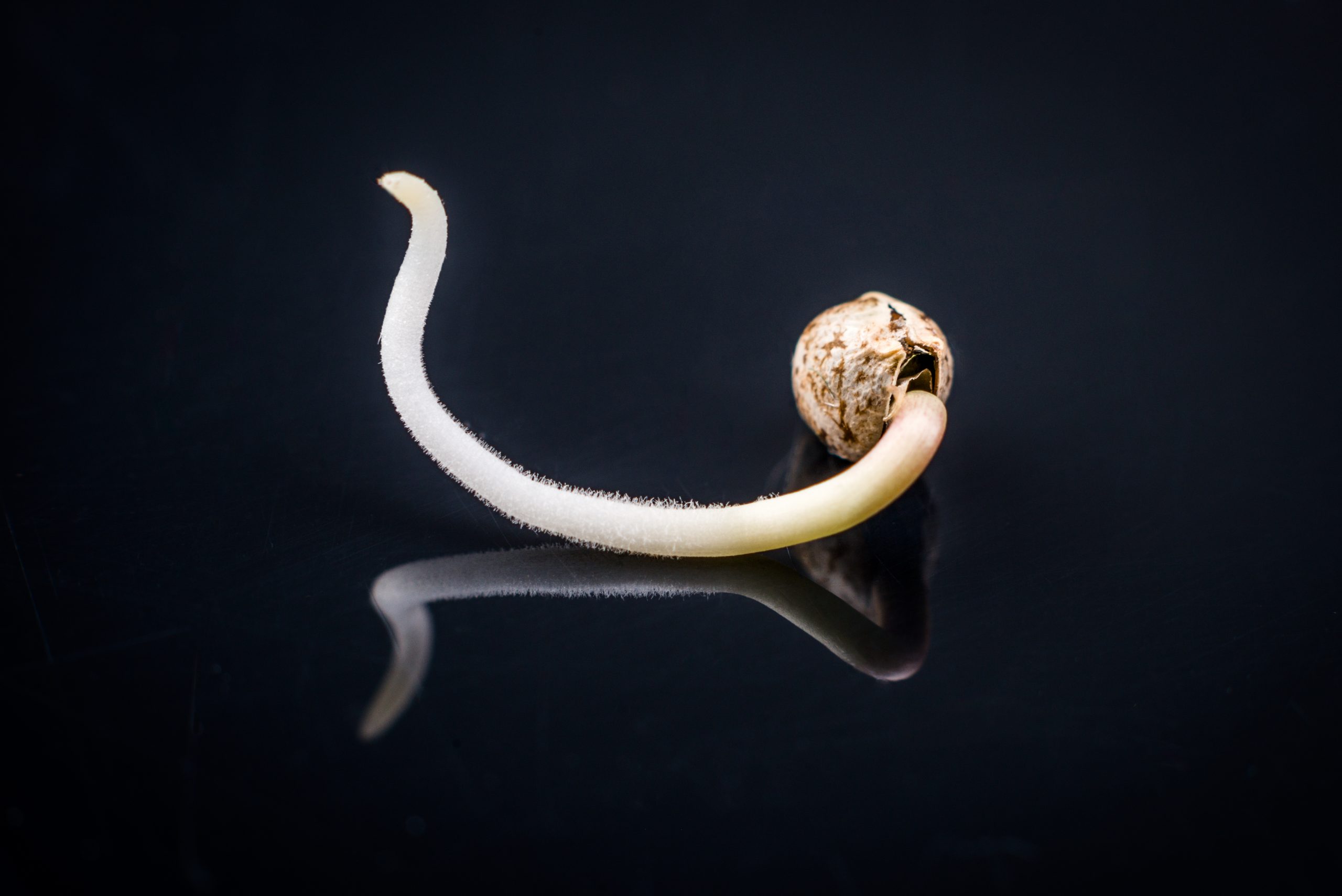
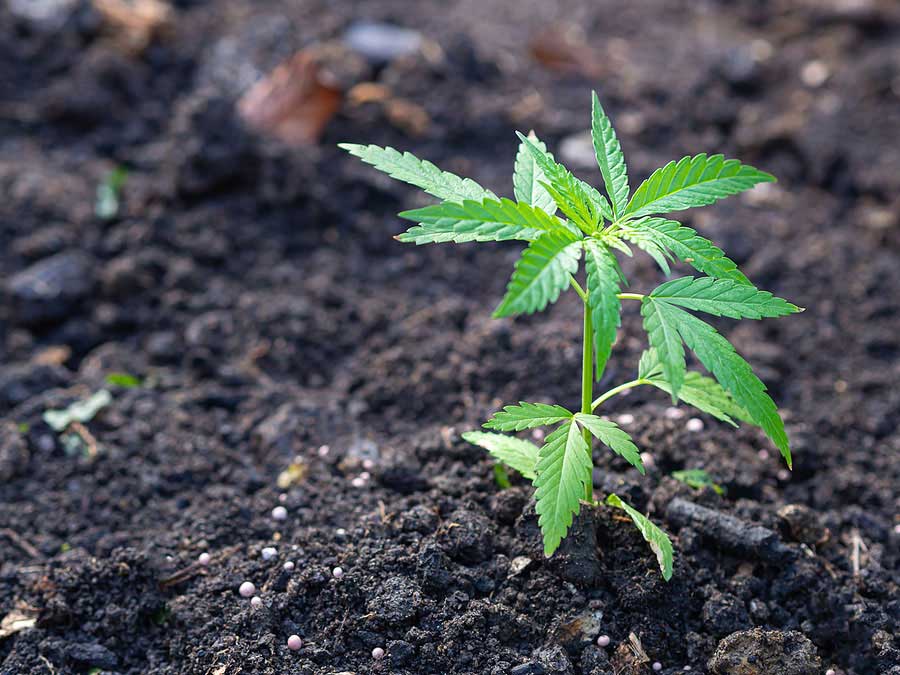
Many seeds sprout very easily, although others can require more days. If the seed breaks and a new sprout emerges, you realize the seed has germinated. That’s the taproot, that would become the plant’s main core, and seeing it is a symbol of effective germination. Keeping this area sterile is essential, so don’t contact the seed or taproot because as the seed starts to break.

Here are the Steps of Growing Marijuana Seeds:

Replanting of germinated hemp seeds:

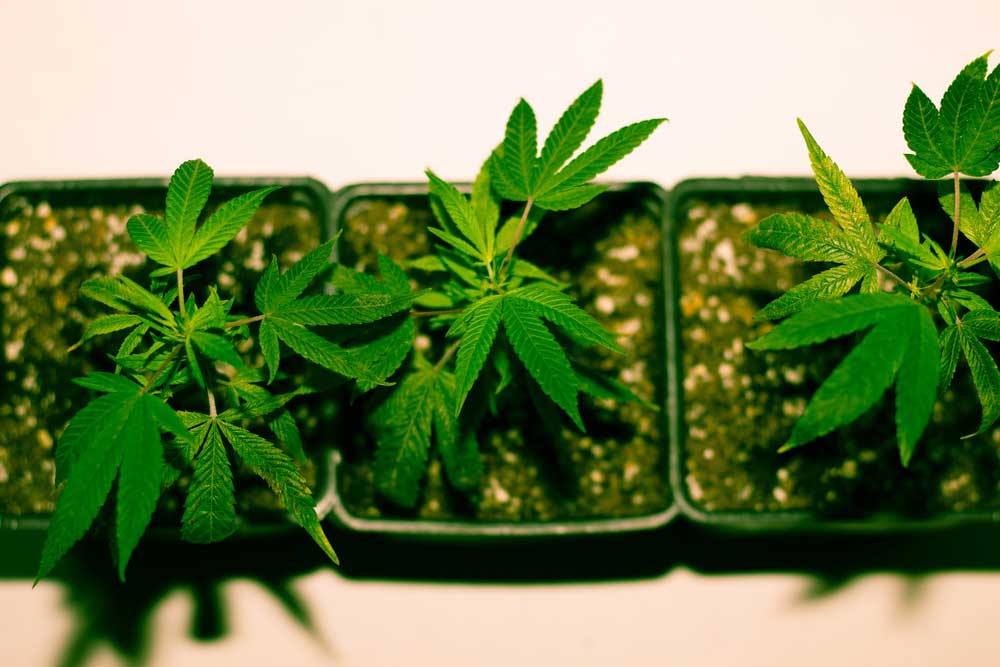
After the seeds have started growing they need to be planted.   If you have used a form of germination that allows you to transfer the sprouts, as the taproot is quite delicate, do that gently. You wouldn’t want it to be touched. It will live whether you hit it or break it, but it will certainly stunt the growth of your plant. Drop the white root downward while planting. In the growing medium, around half an inch to an inch should be positioned (knuckle deep). Just below the surface should lie the top of the seed. Cover gently and encourage the seedling to burst through the soil for about two weeks (10 days highest possible). It could appear on the same day, but if it did not peek out for 10 days, it certainly did not thrive. 

Do not panic if the seed is planted upside down unintentionally. Nature has a way where it will figure out itself. As long as there’s ample space for the roots to finally expand down, they can. Give him a little time to let him do his thing! Germination doesn’t need to be complicated. Are you ready for growth to begin? All begins with the proper seeds.

Vegetative Stage:

The time that green leaves cross, the photosynthesis of light starts in earnest. The plants are starting to metabolize, as well as the vegetative process has started. 

Indoors: Lamps are adjusted to a light regime of 18 hours a day, 6 hours a night. It doesn’t need to sync with the real hours of daylight, you could adjust it to fit you at periods of the day. Loading electrical machinery can save you a great deal of money during off-peak hours. 

Inorganic soil, the plants are satisfied or nutrients built for the vegetative process are fed to them. Often fan-forced breezes bring temperatures under check and make your young plants healthier. Exotic methods may be used to incorporate carbon dioxide into the air. Low-stress preparation and scragging may be used to improve indoor weed projected growth and flower production.

Outdoors: As daytime temperatures continue to rise through spring and then into summer, weed expands exponentially. During the vegetative process, infinite root room and strong genetics will see plants grow to 3 or 4 meters. 

During the entire growth cycle, most contemporary plants are constantly topped and under-shucked. This promotes an even canopy that during the bloom process can fill with homogeneously sized buds. Although there are more than 12 hours of sunshine, weed can keep vegetating. The more you are from the equator, the less vegetation period your marijuana would have until it begins growing.

Flowering Stage:

For the cannabis plant, blooming, planting, and budding both apply to the same process of development. As aromas begin to produce, the next few months are going to be exciting times. Unique flower arrangements that are relevant to your preference of strain are now beginning to appear. There are distinctive chapters in the flowering process that are common to all cannabis plants and begin when the foliage stops. 

A notable shift in the development cycle arises at the very outset of the flowering process. The branch development starts to zig-zag and compact with little space between branches, instead of the striving and stretching symmetry of plants. There is a rather clear distinction. 

In all plants, albeit for varying periods, flowering follows the same steps. Weeks before a long maturing Sativa, a fast Indica is cured and in the pipe. Proper flowers may begin to develop soon after differentiation. Calyxes will appear rapidly forming pistil-covered puffballs at branch internodes. In the young trichomes mostly on calyxes, pistils, and leaves surfaces, several desired resins are still developing. 

Along with their spike, the puffballs of calyxes continue to extend. New fluorescent clusters and bud-specific leaves allow room for this. These latest leaves are thicker, narrower, sometimes deeply crinkled, and surrounded by trichomes, unlike sugar leaves. The swelling flower clusters gradually partly submerge them. These flower clusters multiply throughout the weeks and form large colas coated in swollen trichomes of resin. The calyxes as well as the trichomes expand with vast amounts of suitable resins remaining to grow more. Complete ripeness approaches soon.

Harvesting Marijuana, Drying, and Pruning:

Nutrients will be neglected during the past few weeks and your crops would be washed out of safe water. This assures a pure nutrient-free flavor and constructed salt aftertaste. The way to harvest is not fixed. Be comely and grow by doing so. Some may damp trim that extracts all the leaves when the plant is still intact, and more breaks down the plant. Supposed to hang branches to dry on a drying rack or holding single buds. Only after harvesting can some cut the large sugar leaves and hang the entire plant. There have been no fixed guidelines but for cautious handling. You want as least as possible to disrupt the fragile trichomes.

Dry your buds in a nice, dark position with very little moisture. Preferably, this is a very long phase that can require a minimum of 2 weeks. Small branches can quickly break when dry. There would also be slightly fluid dense branches. The chlorophyll has deteriorated and colors depending on species have been substituted with the green of development. As the bud’s true dry colors develop, tan, light green or even deep blue and purple will appear.

Storing Cured Weed Buds:

For the first 2 weeks, release the top or “burp” the container once a day. This activates built-up moisture that will cause your buds to mold. Only burp the container once a week once the flowers are dry to the touch. You don’t want to ruin weeks of diligent work with a lack of focus.

Now that you have reached the end of this growing guide, we hope that you’ll have a successful growing journey. Give us feedback and show us your beautiful buds after following all the steps. Happy planting! [/vc_column_text][/vc_column][/vc_row]