



605+ Cannabis Strains over 20 Breeders worldwide.

Toll Free: +1 (800) 805-7835

Blog

How to Prevent Hermaphroditism From Affecting Your Marijuana Plants

Usually, marijuana plants come in both male and female sexes that can easily be distinguished from one another. Different genders play different roles and create different results, depending on what a cannabis cultivator is after. Male plants are used to produce pollen to fertilize female plants and spur reproduction. Female plants, when pollinated, produce more seeds to increase their specie. When these female plants are never pollinated, however, they use their resources to grow buds, produce more THC, and become more psychoactive than male plants and fertilized female plants.

However, sometimes, certain plants grow to exhibit both male and female structures on the same plants. These plants are called hermaphrodite plants.

Hermaphroditism is not exclusive to cannabis plants. In fact, this phenomenon is usual in nature as certain species go on survival mode and enables the process of self-fertilization. Many animals, such as earthworms, slugs, and snails, are hermaphrodites. And while this may sound interesting or cool, hermaphroditism in cannabis plants is actually a problem that many cultivators want to avoid.

Since the cannabis plant is capable of pollinating itself, female flowers will now focus their energy on producing seeded buds instead of actual flower buds that contain the psychoactive effects. Seeded buds are only useful in creating feminized seeds. Otherwise, they are completely useless and even impossible to sell. The flower buds, on the other hand, are what can be harvested and smoked.

A single hermaphrodite plant can be very frustrating for cannabis growers as they can easily pollinate all the female flowers, flushing down months of hard work, patience, and effort down the drain. Additionally, if these hermaphrodite plants are left to grow and continue to release pollens, this undesirable trait will be passed down from one generation to the next.

How does hermaphroditism in cannabis plants happen?

There are some common reasons to blame for marijuana plants becoming hermaphrodites.

Natural genetic trait

The first one is genetics. Some cannabis strains, such as the Thai Sativas or Gorilla Glue #4, tend to grow as hermaphrodite plants as a result of their natural genetic inheritance. Most likely than not, they come from a line of strains who were subjected to breeding errors that introduced hermaphroditism tendencies.

Environmental stress

Certain environmental influences, which materializes as stress for the plants, can result in them developing hermaphroditism. Essentially, cannabis plants crave a stable set of practices or environmental conditions. As soon as a plant feels that the conditions for its bloom phase are unfavorable, it goes on survival mode and pollinates its own female flowers by growing male pollen clusters.

Environmental stress comes in many forms. This includes temperatures being too high or too low. Or if their light cycles are very unreliable with disruptions during their night period. Too much or too little water can also stress the plant, causing them to go hermaphrodite. Diseases or pest infestations are also forms of stress. If the plants are overfed or underfed or if the nutrients mix is at the wrong PH or if the plants are suffering from root rot and broken branches – all these factors can provoke hermaphroditism.

Trimming the cannabis plants near or in their flowering phase will also trigger a hermaphrodite marijuana situation. Anything less than perfect conditions can create stress, and stress can increase the tendency for the plant to go hermaphrodite, especially if they have the genetic dominance to become one.

Late flowering phase

Cannabis plants that have been left on the flowering phase for too long will begin producing hermaphroditic clones. Since the plants will have waited a long time to be pollinated and have not gotten any pollen, they can decide to make male flower clusters themselves to create their own pollen to allow the continuation of their specie.

Manipulated seeds

Feminized seeds tend to become hermaphrodites. This propensity increases when the process of creating these seeds do not follow the natural pathway to grow out as a male or female plant. Nowadays, many cannabis growers have successfully developed several strains that can come up with a 99% chance of creating female-only plants. 

How to prevent hermaphrodite development in cannabis plants?

Watching out for hermaphrodite plants is very time-consuming. The flowers can hide under leaf junctions, especially in large cannabis plants, which makes scoping out floral clusters an impossible and impractical task. Besides, these flowers can develop within a matter of hours.

However, if you want to save your crop production and ensure that you will be able to reap yields of good smoke, the process of avoiding hermaphrodite plants is very important.

Do your research

The general idea is to use the best marijuana genetics you can find when you are considering growing your own cannabis plants. Research on the strain’s sensitivity to hermaphroditism. It would be safer to avoid these strains as special and strict precautions must be taken to avoid producing plants with pollen sacs.

Treat your plants with respect 

To prevent hermaphroditism from affecting your cannabis production, ensure that it avoids stress as much as possible – especially during and around their bloom period. Pay close attention to the different parameters that can affect their development, including but not limited to the following: ambient temperature, lighting, irrigation, structural health, hygiene, and pruning schedule.

Regularly inspect your cannabis plants for any signs of diseases or pests. Keep the area clean and make sure timers are well-monitored. Water them correctly and with the right frequency. Feed them the recommended nutrient mixture and avoid changes in the mixes. Lastly, keep an eye on the trichomes to ensure you do not miss the harvest period and risk hermaphroditism.

Make sure to follow the growing instructions of your specific cannabis plant and avoid trying other practices that have not been tested. Otherwise, you create the risk of eliminating your entire crop of healthy cannabis plants due to the emergence of a single hermaphrodite plant.

Purchase from trusted dealers 

Check online reviews, ask around, and carefully review the feminized or regular seeds you are purchasing. Stick to dealers who are trusted and are known to produce top-quality feminized seeds.

Hermaphroditism in cannabis plants is as troublesome and frustrating as it sounds. Understanding the differences between male and female cannabis plants and knowing how to identify hermaphrodite plants is only one step in preventing this detrimental trait. It is crucial that you read on the strains you want to cultivate and provide a stable, stress-free growing environment to grow healthy and fruitful cannabis yields.
How to Get Female Plants From Your Regular Cannabis

The Cannabis genus originated somewhere in Asia over 12,000 years ago and has ever since spread across all the different continents. Nowadays, these plants have evolved enormously thanks to us, humans. Marijuana breeders have combined different species over the years to create totally new strains of plants.

One of the biggest evolution was the feminization of cannabis plants. This is quite a breakthrough in the complex world of marijuana because only female flowers produce actual psychoactive effects. After years of crossing different plants, breeders have found a way to create plants that have a 99% chance to be a female.

So, how do we create female plants? First, we need to know how to tell the difference between a male and a female cannabis plant.

Male weed

Cannabis plants go through two stages, the vegetative phase, and the flowering phase. In the vegetation stage, it is close to impossible to tell the plant’s gender. Plants spend all their efforts on growing bigger and taller during this stage.

Once the plants switch to its flowering phase, they focus on growing flowers. At this point, we can now tell whether a plant is male or female. Male weed plants have grape-like balls, which look like a cluster of small flowers, that open up to produce pollen. They do not have any pistils on them. If the male is allowed to continue to grow, theses balls or pollen sacs will eventually burst open and let their pollen out.

Female weed

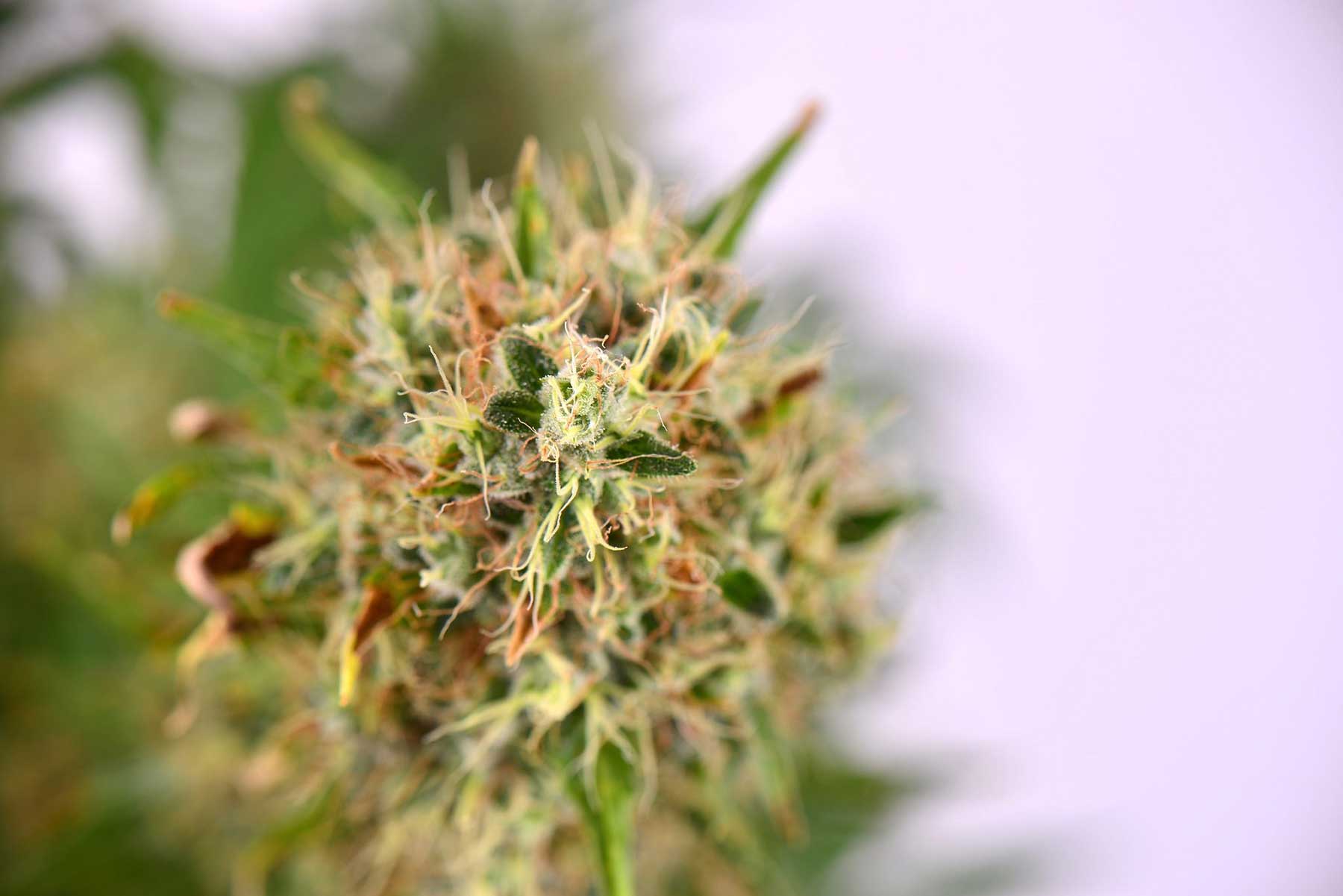
Female plants are easy to recognize, as the first thing you’ll see is at least one or two wispy white hairs or pistils protruding from their calyxes. All cannabis growers are after these female weeds because they produce the buds that contain the most THC concentration and rich cannabinoid profiles. Having a garden of unpollinated females means a continuous supply of psychoactive nuggets.

Now that we have understood the process of identifying a male vs. a female cannabis plant, we need to know how to possibly grow all-female weeds from seeds on every plant, every time.

When growing marijuana from seeds, you will only have lesser chances of getting female seeds as, statistically, regular cannabis produces 75% or more male seeds per crop. In order to increase our chances of getting up to 99% feminized seeds, here are some techniques and tricks of the trade that many experienced breeders swear on.

Stable growing environment

The stability of the growing environment is important to increase the chances of getting a female plant from your crop. Studies have shown that environmental stress tends to produce more males and lesser females. A stable environment covers all the essential requirements needed to grow a marijuana plant. This includes temperatures, humidity, light cycles, and nutrient feedings.

Humidity and Moisture 

As soon as the seed has its first few pairs of leaves, influencing the settings to have lower temperatures and higher humidity will contribute to an increase in female development. Once these have been set, both temperatures and humidity in air and soil should have as few fluctuations as possible. A humidity level of at least 70% to 80% RH is the ideal level for healthy female plants. This ensures that the growing medium does not dry out too much or becomes too soggy and drenched with water. Either way, the plant will become stressed, and this will encourage more male development.

As the plants grow to become pubescent plants, make sure to adjust the humidity levels to an exact 70% RH. Using the necessary tools like a humidifier or dehumidifier and a hygrometer will ensure that we are able to maintain stable conditions.

Once the plant reaches its flowering stage, adjust the levels gradually to reach 40% to 50% RH. The keyword here is “gradually.” An abrupt change will, needless to say, stress the plants and result in problems for the cannabis flowers.

Lightcycles

Lightcycles should also be maintained at the same length every day and basically should begin and end at the same time. While it is always tempting to expose the plants to more hours of light to encourage faster growth, studies have shown that longer hours of daylights tend to produce more males. On the contrary, fewer hours of daylight will increase the likelihood of females developing.

For your cannabis plants, exposing them to nothing more than a 14-6 day-night photoperiod will maximize the chances of females. Some breeders may opt to increase this to an 18-6 light cycle, and add an extra week of vegetation, as shorter day length slows the growth of the plants. The 18-6 photoperiod is still acceptable as long as they do not go over 18 hours. Otherwise, the likelihood of males increases by as much as 70% to 100%. Patience during the vegetative phase is greatly rewarded.

Blue lights

Natural light may appear white to us, but it is actually made up of different colors. And cannabis plants are influenced on how to grow based on the spectrum of light that they receive. Red lights increase the likelihood of male plants, while blue lights encourage female development. Blue lights include white and blue fluorescent lights and metal halide lamps. They are blue based on their spectrum and imitate the natural light we get during spring and summer times more effectively.

Nitrogen and potassium levels

Plants use mineral nutrients, including nitrogen and potassium, to grow. Cannabis breeders develop specific nutrient programs for their plants to influence their plants’ shape, size, potential, and even gender. By increasing nitrogen levels slightly and decreasing potassium, cannabis growers can increase the likelihood of female development. Additionally, nutrient mixes should be exact on every feeding, especially during the vegetative phase, as any sudden spikes or dips in the mixes will cause stress on the cannabis plants.

Conclusion

Following these simple and easy-to-follow tips will maximize female cannabis development, but it does not work every single time. However, surveys have shown that it does work 99% of the time, which is still a pretty good number. The general idea here is to grow regular seeds in a resource-efficient and stress-free way in order to get female weeds all the time.

How to Breed New Strains With Regular Cannabis Seeds

Breeding cannabis has served an important role in cannabis culture, and it has been a part of the horticulture industry for many, many years. The great thing about this is that more and more growers have become more passionate about creating their own cannabis strain.

If you are interested, keep on reading to check out whether breeding is something that is a good match for you.

Why Should You Breed Cannabis?

Producing new hybrid strains come with different amazing advantages that will make the users and growers enjoy something new all around. For many cannabis users, hybrid cannabis strains allow them to enjoy a good mixture of the best things that they like in their two most favorite strains and allowing them to get rid of the negative effects or the things that they dislike from the strains. As the cultivators are able to refine and improve cannabis genetics, you can enjoy better quality cannabis and will feel the overall experience for growing and using cannabis.

Breeding is also perfect for cannabis enthusiasts who feel that they need a little more THC if they are a recreational user, and more CBD, if they are a medicinal cannabis user. The higher the presence of each of these cannabinoids, the more your cannabis will become as potent as it can be. This highlights the effects of the cannabis strain, as well as proving the purpose of why it was developed in the first place

Another reason why you should breed and produce hybrid strains is the positive effects that it can provide to cannabis cultivation. Because these strains possess the great qualities of their parents, the plant has the ability to produce higher amounts of the yield – making the crop top quality. Breeding cannabis strains can also affect and improve different cannabis variables like the size of the buds, the length of the flowering period, resistance against pests and diseases, and the appearance of the plant.

The Steps In Breeding New Cannabis Strains Through The Use of Regular Cannabis Seeds

1. Decide on the strains that you will use.

The very first step in starting this endeavor is looking for the strains that you will use as the parent of your new strain. How can you decide on this? You have to do careful deliberation in making a final decision on the strains that you will select. Make sure that the strains that you will select possess the genetic potential that will meet the specific characteristics that you seek. Usually, breeding uses two strains of cannabis, but you can go as high as 4 strains if that’s what it takes to meet your ideal strain.

2. Identify each of the strains and separate them as needed.

The next part dictates the identification of a male variety of each strain as well as their female variation. Identify the sex of each plant is crucial in the breeding game. Not being able to do this correctly might result in problems with the cannabis grow and the entire breeding process. Remember, in breeding cannabis strains, all forms of pollination should be at the hands of the cultivator and not given to chance. If you are unable to monitor the pollination of the plants, you will never get to identify which plant pollinated another and you will not be able to replicate or present findings in your breeding activities.

3. Begin the pollination of your selected strains.

Once all of the partner cannabis plants are assigned into their designated places, it is time to begin the pollination process. This would entail collecting the pollen from your chosen male plant. This process is fairly easy to complete – you can place plastic bags surrounding the pollen sacs of your plants, wait for them to disperse the pollen, and making sure that you seal these pieces pollen into the plastic containers. Cannabis plant pollen can be stored in your freezer for a few weeks up to 30 days. But, the best practice to observe is to use the pollen upon collection as it would retain the highest quality and potency of the pollen.

How do you know the time to pollinate a female plant? Observe your female plant and wait for the presence of white pistils. Now, once your plant is ready, isolate your female plant in a place where they will be the only ones to receive the pollen of their male counterpart. If you want to ensure that the female plant will be able to get as many pieces of pollen as possible, you can disperse and deliver the pollen through your pollen collection plastic bag, leave it tied in the area of the pistils, and leave them for an hour or two. It would also help to switch of the fans in the grow area to avoid losing the pollen.

4. Observe the proper growing guidelines.

At this point, allow the plant to grow freely and make sure that it receives all the help that it can get. Just like the normal process of growing regular seeds, provide your cannabis hybrid with the proper nutrition, water, and air that it needs to thrive.

5. Harvest your seeds and plant them to check their quality.

Once the parent plants have produced new cannabis seeds, it is time to test your new strain development. The only way to do so is to plant these seeds and prepare them for growth. In the buds and seeds that they produce will you find whether or not your breeding attempt was effective.

6. Never underestimate the value of record keeping.

In the production of a brand new strain, records are the most important part. They are your proof on the breeding that you did and all the pertinent information that you have gathered will help you in analysing the cultivation, the things that need to be tested, and what you can improve on to make it the best cannabis strain that it can be.

Final Thoughts

Breeding new cannabis strains is just like growing seeds on your own. The main difference is that this process allows you to create something new through combining strains that you love, and it also asks observation and record-keeping kills from the aspiring cultivator.

Regular Cannabis Cultivation Common Problems and How to Fix Them

Growing regular seeds is an adventure-filled journey. Just like everything in this world, sometimes you cannot help but encounter some problems. It can happen whether you are still new in this endeavor or you have spent years growing your own cannabis stash. What will make a significant difference in fighting to improve your growing journey and studying different ways of resolving common problems that you might encounter?

1. Overwatering Your Cannabis Plant

Have you noticed dropping leaves in your regular cannabis plant? That is a strong sign that you are overwatering your plant. It is exhibited by leaves feeling firm in your hand with the leaves curling down. It can be because of two main reasons: either you are watering your plant too often, or you are watering your plant too much.

How To Fix

To resolve this problem, you must improve monitoring your plant’s watering time. Stop for a while with watering. When you resume, do it slowly so that the plant will not feel overwhelmed. Also, make sure that if your plant is potted, water has a proper way of draining out. A good rule to follow is to wait until about an inch of depth if the soil feels dry to the touch. Use this rule regularly to ensure that you water your plants just enough.

2. Nutrient Burn

Have the leaves of your regular cannabis plant turned yellow?  Does it appear to have yellow tips? These are the usual signs of nutrient burn. This is a problem that arises when you have given your cannabis plant too much nutrient mixtures or if you are feeding the nutrient mixes too often.

The yellow tips that you are noticing are just the beginning of this journey. If the grower fails to resolve this problem, the entire leaf will look brown and crispy, just like how it would if it were burned. Why should you fix this right away? Losing a lot of leaves will result in lesser yields come harvest time.

How To Fix

If you notice nutrient burn in your plant, pause the feeding schedule of your plant for about one to two weeks. Your plant will use this to flush out all of the extra nutrients and return to normal. Moving forward, make sure that you only get a nutrient mix that is high quality and specifically designed for cannabis plants.

3. Calcium Deficiency

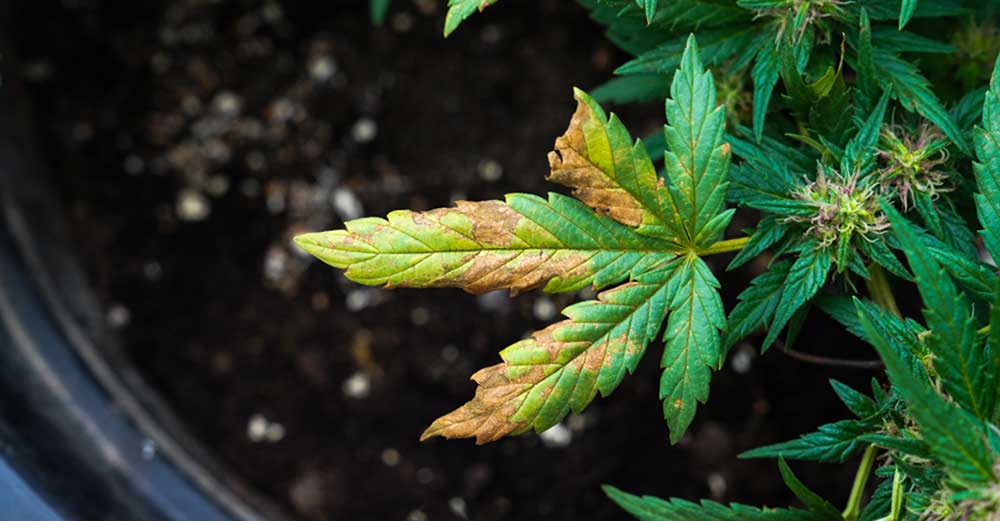
When the leaves of your regular cannabis plant start forming brown spots, this means that your plant is suffering from calcium deficiency. What will your plant use calcium for? Calcium provides the plant with structure and helps it against battling stress. 

How To Fix

The first thing to check for problems like this is the pH level of your soil. In normal cases, it must range from 6.2 to 6.5. If the soil is not at this pH level, you should flush it out with water at the correct pH level. Then, you should supply your plant with a nutrient mixture that contains iron, magnesium, and calcium.

4. Heat Stress

If you might notice, a cannabis plant has some large leaves or its primary leaves. When you encounter them curling upward and looking withered, it might be because your plant is undergoing heat stress. Remember, the optimal temperature for a marijuana plant to thrive is between 70 to 75 degrees Fahrenheit during the day and between 50 to 60 degrees Fahrenheit during the night.

How To Fix

The first-aid remedy for problems like this is ensuring that the airflow at your grow room is well and air can circulate throughout the room. The best way to apply this is by installing a small fan in your grow area. Also, it might do your plant good to move its light a little farther.

5. Fungus Gnats

One thing that you will never want for your cannabis plants is to see them being infested by tiny flying insects. Usually, these flying insects are fungus gnats, and they love messing around with plants. They lay their eggs on wet soil, and they can produce about 200 eggs each week. The problems that they bring are that they take away the minerals and the water that is supposed to be your plant – and it may lead to more serious problems.

How To Fix

One of the easiest options to get rid of these insects is through sticky paper traps. If that is not enough, you can make a solution comprising of some tap water, two tablespoons of dishwater, and a cup of apple cider vinegar. Place it near your plant, and you will notice that the fungus gnats will get attracted to the smell, and they will drown in the solution.

6. Light Burn

Cannabis plants love light – but they have their limits, too, and can only take so much. If you start seeing that the cannabis leaves are turning yellow and the leaves are curling upwards, this means that you have exposed your plant into too much light. This can be because the light source is too close to the location of your plant, or it can also mean that the intensity of the light bulb that you are using is too much for the plant.

How To Fix

Light burn offers a very quick solution – move your light further away from your plant or buy a light bulb with lesser intensity for your plant.

7. Nitrogen Deficiency

One of the most common problems in cannabis plants is not having enough nitrogen. It shows up as having leaves that are too light, exhibiting as bright yellow-green. If this is not addressed, you might lose your plant’s potency and the ability to produce large yields.

How To Fix: This can be corrected by adding more nitrogen into your nutrient mix, or increasing the total dose of your NPK mixture.

Final Thoughts

As a cannabis plant grows, it also has its own obstacles to conquer. The key to making sure that your plant stays healthy is to regularly check up on them and always be on the lookout for something different. Try to provide your plant with the best care that it needs, and it will reward you with a generous harvest.

Factors to Consider Before Growing Regular Cannabis Seeds

So, you’ve decided to grow your own marijuana stash. This decision will surely bring you tons of benefits when you do it correctly, but there is no denying that you still have a lot of things to consider before you explore this matter. If you are not prepared, and you jump straight in, the cultivation will just bring you stress, and you might not be able to maximize the resources that you are provided with.

Though there are many dispensaries opening all over the world, like Rocket Seeds, there is just something special about growing cannabis on your own. A great bonus is being able to ensure that you get quality buds and being able to save money in the long run. 

In this article, you will learn more about how to get started on cultivating cannabis and everything that you should consider before you begin.

Know Your Local & National Regulations

The first thing that you should consider is to educate yourself about the laws involving cannabis – especially cannabis cultivation. Various cities and states are legalizing cannabis and passing new legislation, but many countries are still treating this as something punishable by law. Therefore, you should be very cautious and take your time to do valuable research. These things can shape your other decisions and avoid some problems in the long run.

Educate Yourself On The Basics Of Cannabis Cultivation

Growing cannabis does not require you to become an expert, but it still helps to stock up on all of the knowledge that you can get. Consider this: the more research that you commit on before you begin your cultivation, the more you will feel at ease with the process, and the more equipped you will become in reaching your target harvest.

Here are some important things to remember:

  1. A cannabis plant can either be male or female. If you are looking into growing cannabis flowers or buds for smoking, you should never allow male and female cannabis plants to interact.
  2. Cannabis plants can thrive indoors, outdoors, or in greenhouses, depending on the strain, the time of the year that you plant, and the climate in the grow area.
  3. A cannabis plant can either be a Sativa or an Indica.
  4. A cannabis seed undergoes three stages for it to complete one life cycle. They are the seedling stage, the vegetative stage, and the flowering stage.

Prepare Yourself For The Financial Investment Of Growing Cannabis

Just like any endeavor, aspiring growers should be prepared for the cost of growing cannabis. Though it can be cheaper if you compare it to always getting your weed supply from dispensaries, there are still equipment, tools, and supplies that you need to purchase.

If you are planning to grow cannabis indoors, the most basic things that you should buy are:

  1. Fan
  2. Grow light/lights
  3. Grow tent or space
  4. Light reflectors
  5. pH meter
  6. Timer
  7. Ventilator

These things are only for beginner setups. You can improve this and add more as you transition to a more professional growing space. In the purchases that you make, make sure that you get those that meet your current budget. Don’t always go for the cheapest option or the most effective one, read reviews, and ask recommendations from experts.

Ensure That You Have Enough Space For Cannabis Growing

Another important factor to ponder on when deciding to start cannabis cultivation is the location that you will assign as your grow area. For starters, the usual requirement is 3 feet by 3 feet square space. Though it can be hard to estimate how many plants you can fit, one square foot of grow area can accommodate about two to four cannabis plants.

For cannabis plants, it is not always ‘the more, the merrier.’ It would do you good to limit yourself to caring for eight plants. This will ensure that each plant will be catered to and have a fair share of the light and nutrients that it needs.

Choose Between Growing Indoors Or Outdoors

Growing plants indoors is perfect if you are a private type of person or if the law forces you to be. Aside from that, many growers lean towards indoor setups because this allows them to gain more control, especially during the time when the cannabis plant is just starting to develop. However, the largest disadvantage for you to think about is the financial investment you have so that you can buy the necessary equipment.

On the other hand, growing outdoors will give you the chance to start cultivation even when you are on a tight budget. In this method, you have free access to sun or rain, so there will be lesser costs to manage. However, there are some cons to this option as well. First, neighbors and passersby might be able to see your crops, and this might create some problems for you, depending on your neighborhood situation. Also, one thing to think about is losing most of the growing conditions as you do not have the ability to control nature.

Do You Have Enough Time On Your Hands?

One of the most crucial things to ask yourself is whether you actually have the time to spare in establishing cannabis cultivation. For instance, a home grower must be able to spend time monitoring the growth of the plant, air temperature, humidity, and lighting setups of the plant. You should also check for the soil moisture in the plant, presence of molds or pests, and other details.

You can eliminate the need for this by purchasing an automated system, but that comes with an additional investment. As an estimate, cannabis plants require an hour or two of your time daily, so if you can provide that or more, then you are good to go.

Final Thoughts

These are some of the essential factors to consider before growing regular cannabis seeds. There are a few more that tackle the specific needs of the plant-like lighting, nutrients, water, and the actual method of planting. It might seem overwhelming, but it gets easier with experience. The best thing to do after gathering knowledge is to apply them. Just enjoy your cultivation journey, and eventually, you will become an expert!

How to Grow Regular Marijuana Seeds Like a Pro

Contrary to what people originally think, the process on how to grow regular marijuana seeds is not really that hard as with feminized seeds or autoflowering variants. Being the first type of seeds that growers were able to access, regular cannabis seeds are accessible for every type of growers – whether they are classified as beginners or experts.

In this article, you will be able to learn more about growing regular cannabis seeds, so that you can try it out on your own.

The Basics of Growing Through Regular Cannabis Seeds

Until the early 2000s, regular cannabis seeds are the sole way into growing cannabis seeds, as they are the only type that you can acquire from breeders, dealers, and seed banks. Though everyone is well aware of the extra step that dictates separating the males from the females, everyone just takes this as a normal part of the process. After all, it was very easy to learn about, just like the process of germinating cannabis seeds.

In its natural state, regular seeds will give the grower a 50% chance of getting a male plant and a 50% chance of getting a female one. However, 50-50 is not the actual ratio, and no one can really say what gender would show up. In fact, there are groups of people that believe the environmental conditions can change the chances of getting either males or females – but this theory is still just a theory.

Steps on How to Grow Regular Marijuana Seeds

1. Choosing the strain to grow.

Before starting your cultivation, decide on the type of cannabis plant that you want to have. Do you want it to have Sativa characteristics? Do you want it to be a relaxing Indica? Are you planning to find a strain for specific medical benefits? With these things in mind, you should also consider the growing environment where you will place this strain. Make sure that the strain that you will select will properly match the space available, the local climate, and your growing experience.

2. Understand the most important parts of cannabis growth.

Air

Though this might be a problem for outdoor growing, growing indoors would mean preparing fresh air and having a fan to make sure there is air circulation.

Water

Water is a vital requirement for the plant to accomplish its biological functions. If you are located somewhere with consistent rainfall, that would be good news. But, if not, or if you are growing indoors, ensure that you can provide clean water as needed while making sure that the pH level is at a good point.

Growing medium

You can opt to go to the classic option: soil. If you are a little adventurous, you can also grow regular marijuana seeds through rock wool, perlite, vermiculite, or coconut coir. Once you have a little more experience, you can also go for hydroponics or aeroponics.

Light

Regular cannabis seeds need 12 hours of light every 24 hours when you are growing outdoors. For indoor setups, you can manipulate the lighting through some timers.

Temperature

Generally, cannabis can survive in places where it is hot or cold. However, if these are at the extremes, the plants can be stressed – or worse, die. The ideal temperatures are at 27 degrees Celsius. Depending on where you are, you can manipulate this through heating mats, cooling mats, air conditioners, or fans.

Nutrients

Just like it needs water, cannabis plants also need food. You can acquire a soil mix that possesses the correct amounts of nutrients. Just make sure that you never go overboard with the amount you provide by following the recommended feeding schedules.

3. Begin cannabis cultivation through germinating seeds.

The life of a plant begins with a seed. To trigger its growth, you should perfect three conditions: water, warmth, and location. You can opt to do so by placing the seeds directly into your preferred growing medium to avoid transplant shock. But, one of the most famous germination techniques involves placing the seeds on a moist paper towel, cover them with plastic or a plate, and wait for a few days until the seed sprouts.

4. The seed enters the vegetative stage.

Once the seedling produces leaves, photosynthesis begins, and the plant starts its metabolic processes.

If you are growing indoors, the lighting must be 18:6, with 18 hours being direct exposure to light. The plants should also be provided with the nutrients that it needs. Low stress training can also be introduced to increase the chances of higher yields.

If you grow regular marijuana seeds outdoors, the vegetative phase usually kicks in the spring and summer, when the days are slightly longer, and plants receive longer exposure to light. You can also apply different plant training techniques to control the height, but if not – plants can grow up to 4 meters or even longer.

5. The flowering phase begins.

After the vegetative stage where the plant grows, it will start blooming and producing buds. You will begin tracing the strong cannabis aroma, and you might also notice various floral arrangements. At this point, the plant is still fed with nutrients – but using a specific formula that is meant for blooming plants. The plant produces calyxes, and you will notice resin developing on the pistils, calyxes, and even the plant’s leaves.

6. The time for harvest.

During this time, prepare to flush out the extra nutrients. This will ensure that the user will taste the pure flavor of the strain, without any form of chemical or nutrient interference. At this point, you might notice that the pistils are changing its color – most likely becoming a dark shade of brown, mauve, or orange. When you see these signs, you can start the collection of the buds to undergo drying and curing.

Final Thoughts

Now that you know how to grow regular marijuana seeds, it is time to apply these theories into action. Take the pick of your favorite cannabis strains and begin testing out your green thumb. Enjoy the journey, and learn as you go. This will make the beginning experience more worthwhile.

The Key Differences Between Regular and Feminized Cannabis Seeds

With more and more people leaning towards growing new types of cannabis seeds like feminized variants, should you really set aside the traditional regular seeds? Is there a significant difference between growing feminized seeds and growing regular ones? In this article, we will look at regular seeds, feminized seeds, and find out what makes them similar, and what makes them different.

First Things First: Cannabis and Reproduction

Before you differentiate these two main types of cannabis, it is important to identify the different sexes of cannabis. A cannabis plant, just like humans, can be born male or female. In some cases, a cannabis plant can also be a hermaphrodite.

Male plants can be characterized by their pollen sacs. These are round or oval-shaped and develop during the flowering stage of the plant. On the other hand, female plants, develop pistils and flowers. These two parts catch the pollen once it is released by the male plants in order to create new seeds. So, in a simple way to look at it, male cannabis plants just have to release pollen, the female plans have to catch it, in order for reproduction to work.

The third type of cannabis plant that rarely occur are hermaphroditic plants. They contain both calyxes and pollen sacs. This usually happens when the cannabis plant encounters stress while it is growing up, making it result into survival mode. For some reason, the plant thinks that it will not experience pollination for the rest of its life, so it tries reproduction with itself. In cases like this, a female plant with pistils and calyxes also develop pollen sacs.

What Are Regular Cannabis Seeds?

Regular cannabis seeds are produced by the meeting of a male and a female plant. Just like what was described earlier, regular seeds are born from the meeting of the pollen from a male cannabis plant to a female cannabis plant. All of this happens naturally – without the interference of a grower, chemicals, or technology.

In the same way, if you plant the regular cannabis seeds that you acquire from this plant, you will experience something similar as you grow them. If you plan on growing cannabis for flowers, you have to focus on the female plant. If you grow a male plant, relocate them to a different location to avoid pollination.

What Are Feminized Cannabis Seeds?

Feminized cannabis seeds are derived from two female cannabis plants, and in return, it only produces female plants 100% of the time. Originally, feminized seeds were designed through subjecting a female cannabis plant to stress – forcing it to produce pollen. When you expose this plant to another female, she will get pollinated and will then result into the production of feminized seeds.

The Key Differences Between Regular and Feminized Cannabis Seeds

1. Though these seeds look fairly the same, they are different in their genetic makeup. Feminized cannabis seeds do not have male chromosomes, while regular cannabis seeds have the complete genetic makeup that allows them to either be male or female in terms of gender.

2. Regular cannabis seeds can be used for breeding, while feminized cannabis seeds cannot. It is very helpful for breeders who seek to improve certain characteristics in a cannabis crop. It is also helpful for growers who want to do some experimentation.

3. Regular cannabis seeds perform so much better in cloning compared to feminized cannabis seeds. Cloning feminized cannabis might not lead to great characteristics once grown.

4. Feminized seeds allow a better consumption of the growing space compared to regular seeds. This is because they give the grower the ability to get the right amount of plants you need at a particular time without having to worry if any males will show up.

Advantages Of Growing Feminized Seeds

1. By growing feminized cannabis seeds, you have the ability to make the process easier and quicker. You can eliminate the steps of having to find the sexes of the plants and having to remove them in your grow room.

2. The best part of growing feminized seeds is that it allows the efficiency in your grow space – especially if you are growing indoors with a limited area. As you will surely produce dank buds at any time, you will be able to enjoy a consistent, stable, and bountiful amount of yield.

3. Feminized seeds are strong enough to withstand different types of plant training techniques even at the early stages of growth.

Advantages Of Growing Regular Seeds

1. For many cannabis growers, finding phenotypes is the only reason why they take time on cannabis cultivation. By sticking to regular seeds, the growers are sure that they get the full lineage of the cannabis strains. This assures that you will get a genetically untouched phenotype that is totally unique and have characteristics that you can be sure of every time.

2. Another great thing about growing regular seeds is that you can create your own cannabis strain. This means that you can breed the male and female cannabis plants that you have in your own grow rooms. These will produce a strain that will feature the best characteristics of both of its parents.

3. Growing regular seeds can even give you a chance on a small scale commercial growing. You can organize a small breeding project where the bottom line is to create your own type of cannabis strain that will be enjoyed by the community for years to come. After you have practiced breeding clones and male plants, you will be able to have a strain that you can truly call your own.

4. One of the best parts of growing regular strains is that it allows you to get the old school strains that were never modified to be a part of the selection of feminized strains. If you are a fan of the early days of cannabis and you never want to forget the old school gems, you can find them among traditional regular seed breeders and include them in your next purchase. 

Final Thoughts

Both regular cannabis seeds and feminized cannabis seeds offer something unique and special to the industry. At the end of the day, it all boils down to what your true purpose in cultivation is. If you are after breeding, you can go for regular seeds. If you are after a shorter growing time, you can go for feminized seeds.

Regular Marijuana Seeds: Facts and Information

If you are interested to learn more about cannabis cultivation, it is important to familiarize yourself with the most basic one – regular cannabis seeds. This is the most natural you can get in terms of cannabis seeds. The most common description of these seeds is that with these plants, you have a 50-50 chance of raising a male or a female plant – an ideal set up for cannabis breeders.

Are you interested to learn more about regular marijuana seeds? Keep on reading to learn more.

Regular Cannabis Seeds Defined

Regular cannabis seeds are cannabis at their natural state – free from any form of human tampering and modification. This means that every time that you germinate these seeds, you are making a gamble or playing with a 50-50 risk. What are you risking? The possibility of these seeds growing up to be flower producing females and pollen-producing males cannot be manipulated and is fully up to fate.

But, why would you want to grow male cannabis plants if they will not produce your needed flowers? Should you not use regular seeds entirely? If you want to learn how to breed cannabis, you definitely should. Male plants are very important for breeding. More than that, if you want to reproduce cannabis plants via cloning, regular seeds can produce the best clones.

Benefits Of Growing Regular Cannabis Seeds

In recent years, feminized seeds have begun gaining popularity. Perhaps it is because they are easier to grow for people who are exclusively growing to get buds to smoke. But, this does not mean that regular cannabis seeds do not come with benefits.

Generally, regular strains are highly vital to the production of new and improved cannabis strains. Aside from that, regular seeds are famous for being able to produce plants that are more vigorous compared to others. Another great thing about regular cannabis seeds is that they can withstand stress very well, they are hardier against challenges and external variables, and they are also perfect for acquiring cuttings and clones in order to create similar plants that can produce amazing yields.

The Role of Regular Cannabis Seeds in Breeding

In the simplest arguments that you can imagine, the reason why regular cannabis is important is without them, breeding cannabis will not be possible. The process is as simple as choosing your favorite two strains among the thousands available, get one as a female and one as a male, and cross-pollinate them to produce offspring that will inherit both of the characteristics of its parents.

The Role of Regular Cannabis in Cloning

Once regular cannabis seeds mature, growers will be able to celebrate how they can provide strong and healthy clones. Cloning gives cannabis growers the chance to make an exact genetic copy of a specific type of plant. For instance, you encounter a cannabis plant that you like the appearance, scent, or other traits, you can duplicate this same strain through the application of cloning techniques.

When these cutting start producing roots, the growers can make the most of the advantage and produce more cannabis plants in a shorter amount of time. The stage that comprises the germination and the early seedling phase will now be skipped. In no time, you will be able to start taking care of the plant while it is in its vegetation phase.

Tips That You Can Use For Regular Cannabis Seeds

The process of growing regular cannabis seeds is almost very identical in growing feminized cannabis seeds. Here are some tips that you can try out.

1. For germinating cannabis seeds

To start growing cannabis seeds, you can place the seeds directly into the soil but this one comes with the gamble or being unknown on whether they will germinate or not. You also have the option to do the paper towel method, so that you can check on which seeds will germinate. This begins with placing the seeds in a damp paper towel and leaving them covered in a cool dark place for a few days.

You can also use starter kits that are available in many seed banks or gardening stores to help you get better germination rates and ease in new cannabis growers to the entire process.

2. Should you grow indoors or outdoors?

Regular cannabis seeds can be cultivated indoors or outdoors – but which one should you go for? If you choose to grow indoors, you have more control and power over the variables and the growing environments. Looking at it, you have the power over the lighting of the plant, watering, humidity, and temperatures for the betterment of your cultivation. On the other hand, the only limitation of growing cannabis inside is space. You will only successfully grow small to medium plants indoors.

If you choose to grow outdoors, you have to be prepared to let your plant become exposed to different uncontrollable elements. The plant will be able to receive all the sunlight that it needs to grow, but you need to be ready against storms, heat waves, droughts, and floods. You should also be prepared to deal with fungi, pests, and other microorganisms.

3. Identifying sexes

You will be able to identify the gender of your marijuana plant once you notice the something emerging at its nodes. For females, you will be able to see flowers, while, for males, you will be able to see some pollen sacs. The female flowers that you will see are designed as buds with small white hairs all over. The pollen sacs just look like round cases that are smooth and hairless.

The way that you will be able to recognize each of them is towards the end part of the vegetative phase. Once you notice male plants appearing, you should separate them from the females that you grow, especially if you have no plans of pollinating the plants and producing seeds.

Final Thoughts

Looking through the history of cannabis cultivation, you will be able to see that regular seeds have served as the main source of growing these plants. Though, the market was eventually taken by feminized seeds, regular seeds still prove how essential they are in cannabis cultivation. If you ever want to deepen your understanding of everything cannabis, try growing regular seeds on your own and see how your experience will look like.

Get authentic and best quality regular cannabis seeds here!

Guide to Autoflower Light Schedule

It is a fact that autoflower can grow and flower without dependence on light. But an ideal autoflower light schedule for growers can optimize health and yield. 

Autoflower seeds can grow with minimal maintenance as it grows fast. They don’t need a lot of space. But you shouldn’t just settle for the sake of growing them. You should know the proper light schedule for high yields. No one would gain from it but you, yourself. Though they’re usually in a short frame, it can keep up with the bigger ones’ harvest.

Types of Suitable Grow Lights for Autoflowers

There are two types of suitable grow lights for autoflowers, and they are LED and HID or high-intensity discharge lights. LEDs are just the recent fad for growing Cannabis indoors as they’re affordable even though they have the advanced capacity. HID is an old standard, but some growers still use them.

Here are some important details that you need to know about each type. 

1. HID (MH, HPS)

This type of light is cheap yet powerful, so it can make Cannabis grow well. There are two kinds of HID bulbs. The first one is MH, which means metal halide and HPS, which stands for high-pressure sodium. 

When it’s with photoperiod strains, MH is used for vegetation and HPS for flowering. A bluish light came out of the MH to optimize the plant’s developing stage. HPS releases a reddish or orange spectrum, and it supports bud growth, so it’s ideal for the flowering stage.

Using HIDs for autoflowers will be in the same way when you grow photoperiod varieties. You need to shift from MH to HPS to develop huge buds. 

When you compare it to LEDs, it’s inexpensive, but it can grow quality buds. However, there are some advantages. It would require two bulbs, and a single piece of LED can get you through the entire life cycle of Cannabis.

The bulbs produce a lot of heat. You need to buy a reflector, and a special power supply called a ballast to complete the lighting system. Even the bulbs are not expensive, additional pieces of equipment will increase your operational cost.

There’s also another kind of HID called LEC. It’s energy-efficient, and it has a spectrum that is similar to the sun rays. Some cultivators think that it’s beneficial to the plants’ development.

2. LEDs

When LED lights were just new in the market, Cannabis growers didn’t take them seriously. Then it came to a point when the effectiveness of these lights was discovered, and the issue with it was the price. They were expensive at first.

When the technology became standardized and evened out, the price was fixed for consumers to afford to buy these lights. It gives more light so it can achieve the same setting as HID. 

LEDs are more expensive than HID; you will realize that using them lowers the operational cost compared when you settle for classic lights. They would only use less energy, so it won’t make your bill hike up. 

There are ‘plug-in and grow’ LEDs, so you won’t need to buy reflectors for things to work out. They’re easy to use too.

Some disadvantages are being outright expensive, and some cheap kinds are all over the market. Then you may be lured to by them as you don’t have any idea. 

But you can get the full-spectrum LEDs as you can use them throughout the growing phase. They remain useful from the moment you plant your seeds until the harvest time. 

Some LEDs feature a switch so you can make changes on the spectrum, which can be from vegetation to flowering. You would need to do it even though you’re growing autoflowers. 

The Setting of Autoflower Light Schedule – Outdoors and Indoors

1. The setting of Light for Outdoor Plantation

Autoflowers are not only suitable for indoor growth but as well as outdoor cultivation. You can even plant them any time outside as they don’t need natural daylight to flower. Set them in your outdoor plantation as long as there’s no presence of frost. 

You can successfully grow autoflowers outdoors. They would flower after 3 to 4 weeks, and the harvesting can be done in a matter of 60 or 70 days. It can make you harvest multiple times in a year.

When you grow autoflowers outdoors, it gives you an advantage to stealth growing or guerrilla gardening because of its short frame. It would help you hide your garden from spectators, and it lessens the chance to be discovered as it can finish in a short period.

When there is efficient lighting indoors, sunlight can also let autoflowers develop well. It won’t only give you a high production but highly potent buds as well.

2. Autoflower Light Schedule in an Indoor Plantation

24-0 Light Schedule

Some Cannabis growers supply light to autoflowers round the clock. They prefer this one as it comes with ease, and it doesn’t need a timer. Most of all, it gives a much better yield.

But the disadvantage of this schedule is that it can consume a lot of energy. When the lights are on all the time uninterrupted, expect a high electric bill.

Somehow, science can back the belief of giving your autoflowers a continuous supply of light. It is the aspect of utilization and absorption of CO2. Some plants cling to the C4 carbon fixation process, which makes them gather CO2 on dark periods to photosynthesize in the light.

But Cannabis is a C3 plant that doesn’t mind about taking a break. It can proceed to photosynthesis even if the lights are on. So this explains why some growers opt for this light schedule.

18 – 6 Light Schedule

Some growers don’t believe in a constant autoflower light schedule. So there’s 18 – 6, which represents 18 hours of light and 6 hours of darkness. 

The philosophy behind this perspective is that plants are exposed to light for a good yield while they take a rest in darkness to maintain healthy growth. Another advantage that won’t be taken by your plant but your pocket as you can save 25% of energy.

It will give the same yield as the 24-0, so why not give your autoflowers a break and save yourself from paying high bills. The only drawback of this schedule has a timer, which isn’t a big deal.

20 – 4 Light Schedule

It’s the middle ground of 24-0 and 18-6 light schedules. Some would add 2 hours of light to assure massive yield. Your electric bill will be a bit higher.

6 – 2 Light Schedule

It’s an uncommon light schedule, but its supporters believe that it can create a controlled environment and stable plants. The 6 – 2 means three sessions of light provision for 6 hours each while the break is done for 2 hours.

The principle of this light schedule is that Cannabis can only process a certain amount of light in a day. After the needed amount of light is fulfilled, the excess is only put to waste. 

The two hours of break are done between every 6 hours so the plants can take a rest and be ready to receive light again. It is during the moments with light that the plants work on developing and enhancing the harvest. 

Its proponents believe that a short period of light will not bring stress to the plants and the cooling system. The time for break allows the room to cool before turning back on the lights. 

But it can stress heating and lights when short light and breaks are frequently applied. This method is under-practiced.

Words for Closing

You need to put more effort into the autoflower light schedule if you want to boost yield. You must not be content with its ability to survive if you want to get a bountiful harvest, just like photoperiod strains. 

Picking the right types of light is a must. Different light schedules are suitable for autoflowers, and you can try each of them to see which one works best, although the common recommendation is 18 – 6.

Top 10 High Yielding Autoflower to Have in Your Garden

In this modern era, people have ways or tricks to compel themselves with easy-to-do things. It’s no different with the Cannabis world. 

There’s a variety of flowers quicker than the usual stuff without the necessity of changing the light cycle. It’s easy to grow, and any beginner can start cultivation with it. It can also withstand any growing condition or environment. 

Though it’s compact, it remains a high yielding autoflower. It could not have happened if Ruderalis stands alone. But breeders got the magnificent idea of crossing them with either Sativa or Indica. 

General Perspective on Autoflowers and Their Yield

In a general perspective, autoflowers are not high in yield as well as potency. Their strength is mainly focused on flowering fast without help from light. Thanks to the genetics of Ruderalis.

Ruderalis is known as a tough plant that can resist cold temperature, and even when it quickly drops. But it has a low THC level. It simply shows that you can’t have it all. 

So master breeders utilized their skills to improve the potency, so they crossed Ruderalis with extremely potent strains. They also did the same thing with the amount of yield. They have associated it with feminized plants for the improvement of both THC and production. 

If you’re an impatient grower, you will seek these amazing strains for sure. With quick flowering time, you will be able to get your hands on high yield. 

Top Ten High Yielding Autoflower

1. Super Critical Auto

Flowering time: 6 to 7 weeks

Yield: 650 grams per square meter

It’s an amazing strain with the genetics of award-winning parents, which are Big Bud, Skunk, and White Widow. It’s an Indica dominant strain that grows fast and yields a massive amount due to its incredible heritage.

It can flower in 7 weeks as it gets tall from 70 to 120 cm. Then the harvest comes in a matter of 2 or 3 weeks. 

Using SOG or Sea of Green method will let you harvest 800 grams per square meter, so that’s why it is the number one high yielding autoflower. When grown outdoors, you can harvest 35 grams per plant.

You will also be impressed with its potency as effects are long-lasting too. It works as a painkiller. You will feel what it can bring without any delay. It will let you feel a body stone, and then it will be sedative. All in all, it’s a relaxing high.

2. Tangie Matic Auto

Flowering time: 9 weeks

Yield: 450 – 670 grams per square meter

With proper tending, you will see that it starts to flower in 9 weeks. It has already reached a height of 80 to 150 cm. It makes Cannabis growers as it gives 450 to 670 grams per square meter when grown indoors. You can also choose to grow it outdoors and get 50 to 350 grams per plant. It can easily be affected by stress so you can pass on training.

It has a high THC that rises to 23%. It’s therapeutic as it can be used for treating depression, anxiety, and stress. It is also used as an appetite stimulator.

It has a fresh scent consisting of tangerine, fruits, herbs, and spices. It adds to its calming effects.

3. Girl Scout Cookies Auto

Flowering Time: 8 to 9 weeks

Yield: 500 to 650 grams per square meter

It came from the infamous Girl Scout Cookies and a Ruderalis. It stretches to 60 or 100 cm as it reaches the flowering period after 8 to 9 weeks. It’s easy to grow as it enjoys regular feeding.

It will give you 500 to 650 grams per square meter when raised indoors. Outdoor plantations will end up with 70 to 300 grams per plant. 

The name gives you a clue on how it tastes. It gives you a cookie smell and taste. It has a sweetness that is filled with chocolate, sugar, and nutmeg. You will not only savor its taste but the effects too.

It hits both mind and body hard. It leans more on the Indica side, but it will turn you into a social butterfly as humor and creativity are intensified. It can also give therapeutic benefits for people who are struggling with neuropathy, PTSD, pain, and muscle spasms.

4. Gorilla Glue Auto

Flowering Time: 8 to 9 weeks

Yield: 400 to 600 grams per square meter

With the word ‘glue’ in its name, this is one of the stickiest strains you can ever encounter. In just a matter of 8 to 9 weeks for the flowering stage, it stretches into 60 to 100 cm. You will get 400 to 600 grams per square meter when you let it grow indoors. 

It grows buds that are huge, compact, tight, and super sticky. You will surely experience the sticky resin getting on your hands, scissors, and gloves.

These sticky buds give off 24% THC. It delivers a high that can make you feel happy and relaxed. So it’s consumed to alleviate pain, PMS, migraines, and stress.

You will get a smell of diesel and pine with lemony notes. The taste is quite similar to the smell as it has a fruity flavor accompanied by pine.

5. Stardawg Auto

Flowering time: 60 days

Yield: 400 to 600 grams per square meter

This strain was made from the combination of Genetics Chemdawg #4 and Tres Dawg. It develops bright green buds that sparkle with crystalized resins pretty quickly after 60 days. 

With the height of 70 to 120 cm, it’s great for stealth growing. Indoor crops will weigh 400 to 600 grams per square meter while the outdoor harvest is 50 to 300 grams per plant. 

It will invite you by getting into your nostrils with a scent that is composed of pine and citrus. You will get an intense lemony scent. It’s a quick-hitter. It stimulates your mind, and it puts you in a state of a stoned body high.

It can treat glaucoma, asthma, epilepsy, nausea, and anxiety. It’s an appetite booster.

6. Crystal Meth Auto

Flowering Time: 8 – 9 weeks

Yield: 400 to 600 grams per square meter

It’s a poly hybrid with the presence of genetics, which came from Early Skunk, Mexican, and Ruderalis. It’s one attractive strain as it displays red, purple, and black foliage with a coating of frosty resins and trichomes.

It will take 8 to 9 weeks to flower, and it will reach the stature of 70 to 120 cm. It will let you harvest 400 to 600 grams per square meter when you grow it indoors. Outdoor plantation gives 50 to 300 grams per plant.

It gives its users a happy, head high with 20% THC. It can provide relief for several health conditions such as depression, stress, asthma, pain, arthritis, PMS, and multiple sclerosis. 

It has a strong nutty aroma with some piney tones. It has an equally appetizing hazelnut taste.

7. Gorilla Glue #4 Auto

Flowering time: 55 – 58 days

Yield: 400 to 600 grams per square meter

It’s one of the best auto strains as it gathered awards. It’s the result of a three-way cross, which was participated by Chem’s Sister, Chocolate Diesel, and Sour Dubble. 

It sways from the typical frame of autoflowers as it reaches the height of 140 to 200 cm. It’s one of the quickest strains to flower as it only needs 55 to 58 days. It can finish after 60 to 75 days, so it is the favorite of impatient growers. 

It gives 400 to 600 grams per square meter from an indoor plantation. The harvest it can give from outdoor cultivation is 50 to 300 grams per plant. 

It’s a potent strain with 23% THC. It will let you get the euphoric ride first; then, it shifts into relaxing body buzz. It is a great remedy for insomnia.

It will tempt you with sweet and spicy aroma accompanied with berry notes. The taste will let you detect chocolate or coffee and diesel in the exhale.

8. Northern Lights x Big Bud Ryder Auto

Flowering time: 10 weeks

Yield: 450 to 600 grams per square meter

You will be able to gather large, dense, and frosty buds, which will start to bloom in 10 weeks. You can collect 450 to 600 grams per square meter from indoor cultivation. Outdoor yield is expected around 70 grams per plant.

The buds contain 22% THC, which lets you experience calming and relaxing body buzz. Therefore, you can use it to treat migraines, chronic pain, and stress.

It tickles your nostrils with its citrus scent while your taste buds feast on mandarin orange and pineapple flavor.

9. Amnesia Gold Auto

Flowering time: 9 to 10 weeks

Yield: 600 grams per square meter

Two Sativa varieties, the famous Amnesia and Lennon, were combined with a Ruderalis to create this hybrid strain. It’s loved by many connoisseurs, so it’s a must-try, especially if you haven’t tried strain with Ruderalis genetics.

The flowering time goes from 9 to 10 weeks, with a height of 60 to 160 cm. Indoor plantations will produce 600 grams per square meter, while outdoor growth can give you 150 grams per plant. 

Its potency is shown in its 19% THC, which gives users a happy head high and a long-lasting psychedelic ride. It’s an appetite enhancer while you get to taste a sweet, citrusy strain.

10. West Coast OG Auto

Flowering time: 8 – 9 weeks

Yield: 500 – 650 grams per square meter

It bears the same genetics with OG Kush plus the Ruderalis traits. Though it is the last strain in the list, it still has an exceptional yield of 500 to 650 grams per square meter when grown indoors. When it flourishes outdoors, it gives 70 to 300 grams per plant.

It’s a chunky plant that stretches up to 90 cm high. It is an Indica variety that releases euphoric and relaxing that can go on for some time. It has medicinal value as it can be used to relieve pain and mental disorders like ADHD, paranoia, and anxiety. 

It has an odor that can easily catch people’s attention. It smells like citrus, coastal scent, and wood. It gives a fruity and citrusy taste.

Afterthoughts

The majority of auto strains are short, so it can be grown indoors as you can easily control the height. Another reason for this choice of growth is that it proves itself as a high yielding autoflower. It produces a higher yield compared to an outdoor plantation.

You can start getting the seeds of the amazing strains on the list from trusted seed banks, like Rocket Seeds. They are the ones that you shouldn’t miss to add in your garden if you want high yield and quick finish.